Can Crypto Protect Your Savings Against Inflation?

The prices of goods and services were out of control in 2021 and 2022. Egg prices rose by 59.9% between November 2021 and a year later, with elementary and secondary school meals spiking 305.2% during the same period.

This was all thanks to rampant inflation.

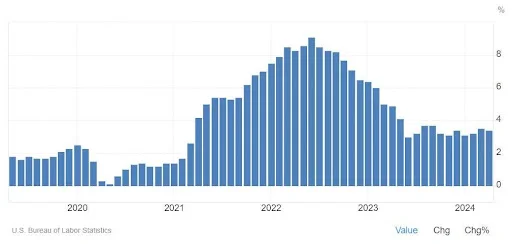
The Consumer Price Index (CPI) hit 9.06% in June 2022 (the highest in 40 years), compared to just 0.12% in May 2020.

Inflation is a consequence of the price of goods and services rising over a sustained period, eroding the purchasing power of earnings and savings.

The inflation rate has since dropped off to a more reasonable 3.36% in April 2024, still some way off the Fed’s target of 2%. But if you think the price of goods and services is still unreasonable, you’re on to something.

Despite the drop in inflation, prices rose by 20.8% from February 2020 to 2024. Even the best high-yield savings accounts don’t provide such yields, so your savings would feel the pinch of the inflationary pressures.

So, could cryptocurrencies guard your savings against the ravages of inflation? Let’s find out.

Inflation Trend

The Threat of Inflation on Your Savings

It is actually desirable for the prices of goods and services to rise over a number of years. But inflation must be moderate for it to benefit a country.

High inflation is triggered by the rapid rise in prices, while deflation, where prices are falling, means the economy is stagnant, experiencing little to no growth. Moderate, stable, and predictable inflation is good as it allows business owners to keep growing and pay their workers higher wages.

When inflation rises, it erodes the dollar’s value, eating into the buying power of your money. If your savings do not grow at the same rate as inflation, you are losing money. You won’t have the capacity to keep up with the cost of living, as inflation curtails your ability to purchase as much as when you began saving.

If you are saving for retirement, you won’t meet your target unless you keep saving more to beat inflation. But that will be a lot harder since commodity prices will rise, making it more difficult to save an extra coin.

The only way to beat inflation is to place your savings in an investment offering a higher interest rate than the inflation rate, and that’s where cryptocurrencies could come in handy.

Characteristics Favoring Cryptocurrencies’ Inflation Protection

Normal/fiat currency is susceptible to inflation because it is subject to manipulation. A country’s Central Bank can print more money in the face of undesirable economic climates.

An example is when the US printed money in 2020 and handed out about $1 trillion collectively to individuals as part of the COVID-19 stimulus package. This partly contributed to the consequent 40-year high inflation rate.

Here are some features that make crypto the go-to solution for fighting inflation:

1. Limited supply

Unlike the case of a Central Bank printing a limitless supply of a fiat currency, most crypto have a predetermined maximum supply in their code. They are finite resources, creating scarcity.

Crypto scarcity is ripe ground for a potential hedge against inflation, as demand for the limited supply could lead to an increase in value.

Bitcoin, with a lifetime supply of 21 million coins to be mined by the year 2140, is a prime example. Research provides evidence that Bitcoin prices usually appreciate against inflation shocks.

2. Decentralization

Cryptos are also free from Central Bank manipulation. They operate on decentralized networks that are not controlled by any entity. This allows cryptos to operate independently. A Central Bank can implement fiscal control by printing more money, leading to inflation.

3. Transparency

The blockchain allows for transparency by displaying all transactions made using a particular crypto. Further, the transaction information is immutable (can’t be changed).

Independent parties can track and ascertain all transactions, making it harder to arbitrarily increase a crypto’s supply without detection. These measures ensure a stable operating environment, reducing the probability of supply inflation.

4. Deflationary tendencies

With time, cryptos are burned while in use. Others are locked in wallets and passwords are forgotten, never to be retrieved. This removes them from circulation, making the crypto deflationary and creating further scarcity.

A WSJ analysis suggests there are about 20% or 1.8 million “lost” Bitcoin worth nearly $20 billion, and it is highly unlikely they’ll be recovered.

How Has Crypto Performed During Inflationary Periods?

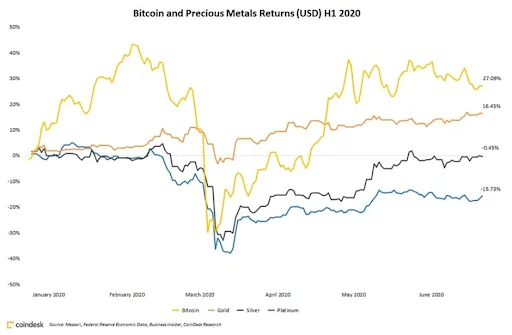
Yes, cryptos are volatile, but they have displayed some resilience in the face of high inflation. For instance, in the first half of 2020, Bitcoin rose by 27%, higher than gold, silver, and platinum, which have long been the traditional hedges for inflation.

Bitcoin outperforms gold, silver, and platinum

Despite gaining 16% during the same period and reaching 8-year highs in June, gold still underperformed the crypto by nearly 11%. Platinum and silver registered negative gains during this time.

This was during a recessionary period, with inflation rising from 1.6% in June 2019 to 2.5% in January 2020, then dropping sharply to 0.2% in May 2020 before rising to 40-year highs in 2022.

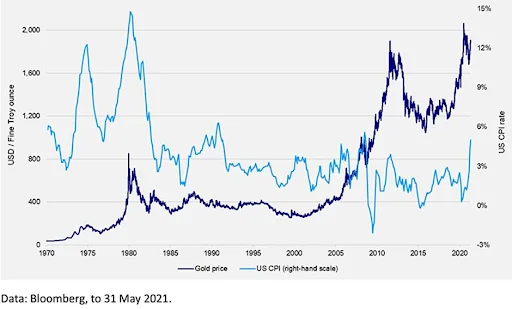
Gold performance vs CPI

For a while, cryptos did well despite rising inflation in 2020 and 2021, with Bitcoin gaining 60% in returns in 2021. Most cryptos were affected by high inflation rates due to diminished purchasing power and devaluation of the dollar.

But when inflation kept soaring and blew past the 9% mark in 2022, cryptos and even commodities felt the heat and plummeted in value. With investors seemingly scared of the riskier investment, Bitcoin lost 64% of its value in 2022.

However, when the Fed eased off its interest rate hikes in 2023, and the CPI cooled to a more manageable yearly average of 3.4%, the narrative changed. Bitcoin gained 156% of its value YoY in 2023, with prices rising to $43,700 in December 2023, up from lows of $16,529 in December 2022.

Overall, cryptos are too new to provide a definitive answer to their claim as a hedge against inflation. Research shows cryptos have positive real returns correlated to inflation but not nominal returns. This suggests cryptos can stop an investor’s money from losing purchasing power as a result of inflation.

Using Bitcoin as an example, the evidence for or against the assertion that cryptos are a hedge against inflation is erratic. Its price performance over time has not supported either thesis conclusively, as it remains relatively untested in diverse economic scenarios.

How do cryptos compare to traditional assets?

There’s no definite correlation between precious metals price performance and inflation. Sometimes, they lose or gain value, all dependent on market sentiment.

For instance, gold gained by nearly 600% between 2000 and 2011, when the inflation was relatively stable, but lost nearly half its value from 2011 to 2016, when the inflation rate was around the Fed’s long-term desired inflation target of 2%.

In 2021 and 2022, when the CPI was 7.2% and 6.4%, gold sank by -3.5% and -0.1%, respectively, but rose 13.4% when the CPI dropped to 3.3% in 2023. Gold reached an all-time high of $2,449 per ounce in May 2024, with inflation hovering around 3-4%.

An ETF that has been tracking the price of gold reported returns of 5.5% annually compared to 15.3% for the S&P 500 for the past 15 years. Although stocks typically perform poorly with rising inflation, they can act as a hedge against inflation in the long run.

Data tracking the S&P 500 shows the largest 500 capitalization stocks gained 10.7% on average since its introduction in 1957, but the average yearly inflation rate from 1914 to 2023 is 3.3%.

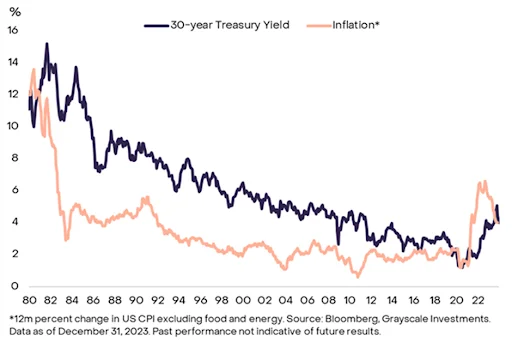
Bonds have also been perceived as a good store for value. They are a source of stable yet small gains. Although bonds yields steadily declined since the 80s, so did inflation, leading to sustained bonds yields over the years.

However, minor gains in bonds usually mean they will underperform in the face of strong inflation. If you invest in bonds with 4-6% yields, your investment will lose value faced with 8-9% inflation rates. As seen in recent years, investors have lost at least 1% of their bonds values annually from 2019 to 2023.

Bonds have lost value since 2019 after a bull market since the 80s

Crypto Portfolio Inflation Protection Strategies for Physicians

Investors must gauge the risk/return tradeoff before deciding which cryptocurrencies to invest in. Fixed income assets offer less risk but provide less returns compared to cryptos.

For example, Bitcoin has annual returns of 50% against 75% volatility, while Ethereum provides annualized returns of close to 80% and annualized volatility of 90%. By contrast, fixed-income investments offer less than 10% in annualized returns and volatility.

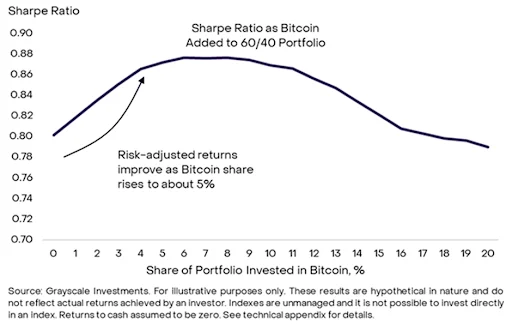
Using Monte Carlo methods and holding a 60/40 stocks and bonds portfolio, a simulation shows adding Bitcoin worth 5% of the total portfolio value offers the optimum Sharpe Ratio, a measure for risk-adjusted returns.

The Sharpe Ratio keeps rising until it gets to 5% before leveling off, showing no improvements in risk-adjusted returns after this mark. Although not entirely accurate, the results suggest holding 5% of Bitcoin in your portfolio is the optimal ratio for risk/returns.

Risk returns ratio

1. Diversification across cryptocurrencies

The best way to mitigate cryptocurrency volatility is to spread your investments across several cryptocurrencies and blockchain assets like NFTs.

This should guard against the risks of investing in a single crypto and reap the rewards of emerging trends. For instance, NFTs had a great run in 2021 through 2022, with the top 10 most expensive pieces being sold for over $7 million during this time.

2. Consider Risk Tolerance and Investment Timeframe

What are your investment objectives? Do you wish to gain wealth in the long term, or are you seeking the thrill of short-term gains? Your goals should help determine which investment strategy to settle on based on the volatility prospects of each asset.

Also, conduct an honest review of your risk tolerance to establish your comfort level. It will help you choose a crypto or asset aligned to your investing style and minimize chances of abandoning strategy mid-investing.

3. Investing strategies for managing volatility

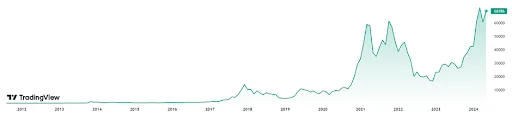
  • HODL: This refers to the long-term buying and holding of crypto. The strategy aims to ride out the price volatility, which will iron out to the investor’s advantage over time. A study of Bitcoin’s price since its inception points to an upward trajectory if held over a long stretch.

Bitcoin’s price rise in the long run

  • Dollar-Cost Averaging: A practice where you make small amounts of recurrent purchases following a set schedule. This relieves the pressure of having to time the market or missing out on opportune moments to buy. In the long run, it reduces the impact of volatility. Investors may make extra purchases when there are significant market dips.
  • Active trading: If you have the time, score short-term gains by frequently buying and selling crypto to exploit crypto volatility. This strategy requires extensive market research and is the most high-risk tactic.

Considerations and Risks

The most common risks and considerations include:

  • Volatility: The bane of every investor. Cryptocurrencies are notoriously volatile, so prepare a strategy to mitigate this risk and avoid being swayed by emotions.
  • Security: There were 283 crypto theft incidents in 2023, with $24.2 billion received by illicit addresses. As of 15 January 2024, $8.37 million worth of crypto had already been reported stolen. Ensure you install sufficient security measures to prevent incidents of hacking and fraud.
  • Regulatory: It is still a relatively new market, so new regulations keep cropping up in different states as legislators come to grips with cryptocurrencies. These new laws may introduce unforeseen risks.

Can Crypto Be Your Inflation Shield?

Most cryptocurrencies have a fixed supply that promotes scarcity. Additionally, they are based on decentralization, suggesting they are prime candidates for inflation protection.

However, being new entrants in the market, they have not yet faced wide-ranging economic scenarios. The data on their performance amidst rising inflation is limited, so it is impossible to draw conclusions on their efficacy as solutions against inflation.

Like any other investment class, cryptocurrencies come with some level of risk. If you intend to spend large sums on purchasing some in an effort to beat inflation, it is in your best interest to seek the services of a financial advisor with crypto experience.

Researchers from the Commonwealth Fund found that Americans visit physicians less often than citizens in other high-income countries and have one of the lowest ratios of practicing physicians and hospital beds per 1,000 people. Yet, the US spends 3-4 times more on healthcare than Japan, New Zealand, and South Korea.

Further, the US spends almost 18% of its GDP covering healthcare costs, yet its citizens are less healthy than those in peer countries. Strangely, the US spent 17.8% of its GDP on healthcare in 2021, nearly double the average spend of OECD countries, yet does not guarantee health coverage as other high-income countries.

health-expenditures-per-capita-u.s.-dollars-2022-current-prices-and-ppp-adjustedWhat does this mean, and how does this affect physicians? This article examines the economic pressures influencing health spending and how it impacts physicians. It also provides valuable strategies physicians can implement to combat the adverse effects of these healthcare spending trends.

Health spending growth

According to the latest national health expenditure (NHE) data, health spending topped $4.5 trillion in 2022, a 4.1% growth from 2021. This represents the total cash spent on health care and its related activities like research and administration.

The data also shows that the economy-wide inflation rate was higher than that affecting the health sector in 2022. Adjusted for inflation affecting the rest of the economy, health spending reduced -2.2% year-over-year (YoY).

However, the NHE deflator compilation data asserts that the real NHE grew by 0.9% during the period. The deflator takes into account the aggregate of consumer and producer price indices for services and commodities.

Overall spending on health in 2022 increased by $175 billion from 2021. Spending on health rose across most categories except federal and state public health, which decreased by $2 billion. The top three categories that registered the highest spending were prescription drugs, hospital expenses, administration costs, and physicians and clinics.

Federal spending on public health

The biggest victim of the pandemic-era spending cuts was federal health spending, which dropped in consecutive years. The data shows it fell from $101 billion in 2021 to $92 billion in 2022 (a 9% dip) on the back of expired federal policies supporting COVID-19 eradication.

This lower spend is still higher than in the pre-pandemic era, so there could be more federal budgetary cuts in the future. Conversely, local and state public spending rose by 6.3% over the same period.

Per person health spending

Research reveals that the US spends nearly twice as much on health per person as its peers. The average per person spend was $13,493 in 2022, with rising medical services prices the primary catalyst for the upward trajectory.

For example, Medicaid spending reached $805.7 billion in 2022. This 9.6% growth over the previous year represents an 18% chunk of the total NHE. Similarly, Medicare expenses were $944.3 billion, a 5.9% growth YoY, accounting for 21% of the NHE.

Private health insurance spending also rose 5.9%, costing $1.28 trillion, accounting for 29% of the NHE.

What is fueling the high cost?

Americans are paying more for similar services as citizens in 12 comparative countries in the OECD are receiving, paying as much as 15% more in some instances.

1. Administrative costs

Administrative costs have ballooned into the largest component of excess spending, representing the biggest catalyst of healthcare expenditure growth. US citizens are paying about 30% more in NHE administrative costs. For instance, hospital care expenses rose 2.2% to $1.4 trillion in 2022.

Further, the number of administrators has grown disproportionally compared to healthcare workers. According to data from the Physicians for a National Health Program using data from the BLS, the number of physicians grew 200% between 1970 and 2019 compared to a 3,800% rise in administrators during the same period.

While the physician growth rate is in line with the population growth, the lopsided increase in administrators has led to the current situation where there are 10 hospital administrators for every physician.Healthcare Administrators Far Outpace Physicians in GrowthAnd hospital bills on a per-person basis have followed the same trajectory, rising 3,100%. Healthcare costs were $353 in 1970 compared to $11,453 in 2019, adjusted for inflation.

Americans spend about 15% more on health insurance-related costs like rework, eligibility, submission, and coding. Additionally, they pay 15% more for human resources, general administration, accreditation, and quality reporting.

total-national-health-expenditures-1970-2022

2. Nurses

American registered nurses make about 1.5 times their peers, translating to about 15% more than in comparative countries.

Travel nurses’ compensation has skyrocketed, with some out-earning physicians. While the median pay for registered nurses is $86,070 annually, travel nurses make $109,564 on average, up to a maximum of $543,048. This is higher than in pediatrics, geriatrics, occupational medicine, and preventive medicine.

The Commonwealth Fund pegs this down to higher educational debt and the context of the American labor market.

3. Prescription drugs

The US spends about double on retail prescription drugs per person than comparable jurisdictions. Further, retail prescriptions range between 2-3 times more expensive than similar offerings in peer countries in the OECD.

Branded drugs cost more and account for about 80% of retail prescription drug purchases. Generic drug prices are almost at par with comparable countries.

The start of every year usually triggers a run of price increases, and 2024 was no different. Research by 46Brooklyn Research reveals there’ve been 962 price hikes on all drugs by the end of March 2024, affecting 72% of all Medicaid brand name drug spend.

After the price changes, the cost per claim of brand-name drugs before the Medicaid rebate has risen to an all-time high of $1,348, up from $1,329 in 2023.

The reason prices are going up is because of rebates, which have been rising as well. Manufacturers’ take-home is shrinking as the average rebate is about 52%. Some medicine makers receive as little as $0.48 on the dollar.

Some manufacturers have been forced to reduce their list prices under the threat of severe penalties imposed by the American Rescue Plan Act. List prices for drugs like inhalers and insulin have dropped by 70%-80%. So, medicine manufacturers are raising drug prices across the board to stay profitable.

4. Per capita out-of-pocket expenditures

The OECD reports that the US fares favorably against its member countries under this category, with American patients forking 11% of health expenditure from their pockets compared to the 18% average across the OECD in 2023.

However, the latest CMS NHE data for 2022 shows out-of-pocket (OOP) spending rose to $471.4 billion (6.6%) in 2022, accounting for 11% of total NHE. This works out to about $1,425 per capita on average, a slight decrease from $1,428 in 2021.

Some OOP expenses, like durable medical equipment, dental services, and physician and clinical services, decreased in 2022, accounting for 34% of the entire OOP expenses.

Note that out-of-pocket expenditure does not include contributions towards health insurance premiums.

Health spending growth vs GDP growth

As noted earlier, NHE spending in 2022 stood at $4.5 trillion, representing 17.3% of the gross domestic product (GDP). Juxtaposed against the consumer price index (CPI), medical care prices rose 3% by June 2023 over the same period in 2022, according to the Bureau of Labor Statistics (BLS).

However, inflation outpaced healthcare prices. This went against the established trend of the past two decades, where medical care prices generally climbed faster than inflation.

Notably, prices for all goods and services, less medical care, rose 3.2%. Primary residential rent experienced the highest growth at 8.3%, with food (5.7%) and electricity (5.4%) the next biggest movers. Gasoline (all types) experienced the largest drop (-26.5%). Core inflation (food and energy excluded) stood at 4.8%.

CPI measures the average change in the prices consumers pay for goods and services over a yearly period. Similarly, Medical care CPI considers changes in medical care prices, including OOP costs and what insurers pay pharmacies and providers.

The latest data shows the CPI for all urban consumers (CPI-U) rose by 0.4% between March and February 2024, while the unadjusted 12-month CPI-U for all items in the year ended March 2024 was 3.5%.

The annual unadjusted CPI-U for medical care commodities as of March 2024 was 2.5%, while medical care services CPI-U was 2.1% over the same period. Overall, the medical care index rose 2.2%.

Tracking health price growth

Physician services CPI for urban consumers grew by 0.5% but was outpaced by prescription drugs at 3.1% and nursing home services at 3.3%. Still, these could not match overall hospital services at 4.2%, with outpatient contributing 5.7% and inpatient chipping in with 3.7%.

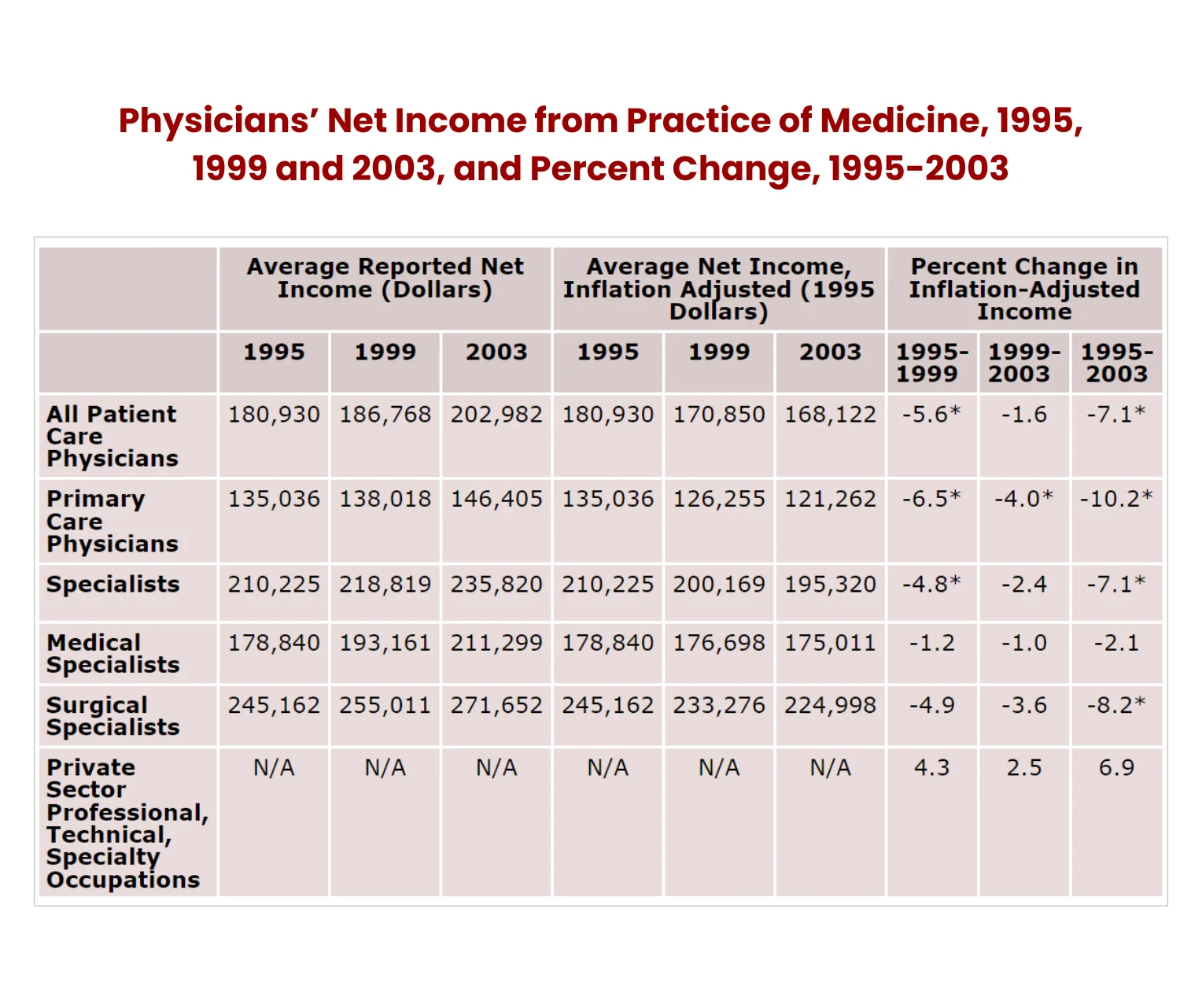
If anything, physician’s inflation-adjusted income has been on a downward spiral for an extended period. A national study by the Center for Studying Health System Change reported that physician’s incomes were reduced by 7% between 1995 and 2003, while other professionals saw their incomes increase by 7% during the same period.

Physicians’ Net Income from Practice of Medicine, 1995, 1999 and 2003, and Percent Change, 1995-2003

Notes: The Bureau of Labor Statistics (BLS) Employment Cost Index of wages and salaries for private sector “professional, technical and specialty” workers was used to calculate estimates for these workers. Significance tests are not available for these estimates. All inflation-adjusted estimates were calculated using the BLS online inflation calculator. The composition of the physician population changed between 1995 and 2003—a fact that makes some estimates of percentage changes in real income appear inconsistent (for example, estimates of income changes for all patient care physicians not falling between estimates for primary care physicians and specialists). These data patterns occur because the proportion of medical specialists steadily increased from 1995 to 2003 (32% to 38%) while the proportions of primary care physicians and surgical specialists both declined by about 3 percentage points.

Further, a Doximity survey carried out between 2017 and 2021 shows although physicians’ compensation across all specializations increased during the period, the 3.15% inflation rate throughout that period meant only 53% of specialties experienced real compensation growth. However, the 7% inflation rate in 2021 wiped out any gains from wage increases.

Physician Gender Pay GapHealth insurance CPI dipped from an all-time-high annual increase of 28.2% in September 2022 to -24.9% in June 2023. Overall, medical care prices realized the slowest decades-long price gain in June 2023.In 2024, BLS data shows the CPI-U for medical care services index went up by 0.6% in March, up from the -0.1% recorded in February. Medical care commodities were up 0.2% in March, higher than the 0.1% recorded the previous month, although this is not seasonally adjusted.

Urban care consumers experienced the best returns in medical care commodities in January as prices dropped by -0.6%. Physicians’ services index rose by 0.1%, hospitals by 1%, and prescription drugs increased by 0.3%.

Urban consumers’ CPI vs health services producer prices

Unlike the general trend for the past decade, urban consumers’ health services producer price index (PPI) rose faster than the CPI. The PPI measures the price change inflation in medical services by physicians and other providers paid by third parties like employers.

PPI considers the actual transaction prices when considering changes in output costs. From June 2009 to June 2023, medical services CPI rose 49.6%, while health care PPI has only achieved a 35.3% growth. This data does not consider medical equipment and prescription drugs PPI and CPI.

What this means for physicians

The growing cost of health spending can only mean medical care is becoming increasingly unaffordable. Patients must contend with medical inflation, rising OOP expenses, and a higher-than-expected consumer inflation rate.

A study found that 74% of Americans worried about their ability to pay off an emergency medical bill. Almost half of American adults surveyed said they couldn’t settle a $500 emergency bill without taking on debt.

Surprisingly, even those with medical insurance coverage or higher incomes are also feeling the pinch. 47% of insured adults say they are having difficulties affording health care costs compared to 85% for the uninsured. 21% of households with incomes over $90,000 reportedly struggle to afford their healthcare costs.

The steady increase in medical costs, especially OOP expenses, has diminished their ability to settle medical bills. For example, commercially insured patients used to be the rock-solid basis of providers’ payer mix, but this has changed drastically over the past few years.

In 2018, for instance, 11% of hospital’s bad debt came from self-pay insured accounts. That figure crept up to 58% by 2022.

Patients were encouraged to utilize OOP to offset rising copayment costs. Most decided to seek over-the-counter (OTC) treatments before visiting the physician. However, insurance premiums crept higher, leaving OTC as the only economically viable choice for patients keen on keeping premium costs low.

As employers delivered lower premiums to workers, this had the unintended consequence of increasing the medical cost burden on employees who needed more care than OTC could provide. This category of employers would be forced to take on co-insurance and higher deductibles.

Commercially insured patients took on more medical debt, which inevitably led to them opting out of essential medical care out of fear of incurring more debt.

What physicians can do to mitigate inflationary pressures

One way physicians can deal with thinning revenue is to stop providing financing in the first place. There are new financing models that take the pressure out of securing medical debts while safeguarding their pay.

These new medical plans safeguard patients from unusually high repayment plans while ensuring healthcare providers receive their full payments promptly. Moreover, the new approach also settles patients’ OOP costs.

Specialist medical payment providers streamline the payment process by paying providers upfront and assuming the long-term payment option with patients.

All this means physicians won’t have to follow up or hire additional staff and collection agencies to chase after bills.

Patients will also seek medical attention when they need it, not when their pocket allows it. This could lead to healthcare providers receiving a steady stream of patients, enhancing their revenues.

Final word

Americans are paying more for less, and physicians are paying the price. The unfavorable economic climate means fewer adults can afford medical care, so they avoid physician office visits even when necessary.

Physicians should adopt new financing models that shift credit risk to third parties who settle their bills upfront and have the expertise and resources to follow up on errant borrowers. This frees up more time for physicians to care for their patients.

To secure your financial future, enroll for our Real Estate Investing Course for Physicians.

CLICK HERE

As a physician or medical professional, you may be considering real estate syndications as an alternative investment to diversify your portfolio and hedge against economic uncertainty. However, it is crucial to understand the risks of real estate syndication before diving in. In this comprehensive blog post, we will explore various aspects of these investments and provide insights on how to mitigate potential pitfalls.

We will delve into the importance of trust between investors and sponsors, performing due diligence checks on deals and sponsors, mitigating market volatility risks through stable cash-flowing assets, reducing exposure through diversification and property selection criteria. Additionally, we will discuss navigating legislative constraints by partnering with experienced legal teams and ensuring adequate insurance coverage.

Lastly, we’ll examine the suitability and limitations of real estate syndications for passive investors like yourself – addressing concerns such as illiquidity issues, high minimum investment requirements, and limited control over property management decisions. By understanding the risks of real estate syndication thoroughly beforehand, you can make informed decisions that align with your long-term investment goals.

Table of Contents:

  • How Real Estate Syndication Works
  • Pooling Resources for Larger Investments
  • Partnering with Experienced Syndicators
  • Why Real Estate Syndications are Safer than Direct Ownership
    • Expertise of Seasoned Operators
    • Mitigating Market Volatility Risks
  • Real Estate Syndication: Pros and Cons
    • Diversification Benefits
    • Illiquidity Concerns
    • High Minimum Investment Requirements
  • Navigating Transparency and Communication Risks
    • Open Conversations with Sponsors
    • Reviewing PPMs for Informed Decision-Making
  • Assessing Market Fluctuations Risk
    • Diverse Employment Opportunities
    • High Median Household Incomes
    • Low Crime Rates
  • Proper Debt Financing Strategies for Real Estate Syndications
  • Legal Risks in Real Estate Syndications
  • FAQs in Relation to Risks of Real Estate Syndication
    • What are the risks of syndicated real estate?
    • What is the risk of syndication?
    • Can you lose money with real estate syndication?
  • Conclusion

How Real Estate Syndication Works

Real estate syndication is a popular investment option that allows passive investors to pool their resources and invest in larger, more lucrative properties like multifamily units.

Pooling Resources for Larger Investments

Multiple passive investors come together to raise capital needed for acquiring high-quality real estate assets, enabling them to participate in deals that would otherwise be inaccessible due to high costs.

Partnering with Experienced Syndicators

Working alongside seasoned professionals within the industry maximizes returns while mitigating risks involved in the process.

  • Diversification: Participating in multiple projects spreads financial exposure across various types of properties and geographic locations.
  • Economies of Scale: Investing alongside other passive investor partners provides increased buying power and cost savings related to property management fees or maintenance expenses.
  • Professional Management: Syndicators have a team of experienced professionals who handle all aspects of property management, allowing passive investors to enjoy the benefits of real estate investment without dealing with day-to-day responsibilities.

Real estate syndications offer passive investors the opportunity to invest in real estate deals without the hassle of property management or the risks involved in direct ownership.

Despite the potential issues, like changes in market conditions, rent control and Section 8 housing impacting returns on investment, real estate syndications remain a popular option for investors aiming to diversify their portfolio and generate passive income from rental properties.

Despite these risks, real estate syndications remain a popular choice for those looking to diversify their investment portfolio and generate passive income through rental properties.

For more information on real estate syndications and the risks involved, check out these credible sources:

  • Investopedia
  • Forbes
  • Bigger Pockets

Why Real Estate Syndications are Safer than Direct Ownership

Real estate syndications are a safer investment option than direct ownership because they allow passive investors to minimize risks by relying on the expertise of seasoned operators.

Expertise of Seasoned Operators

Partnering with experienced sponsors who have a proven track record in acquiring and managing properties reduces the likelihood of costly mistakes often made by inexperienced property owners.

Mitigating Market Volatility Risks

  • Diversification: Investing in multiple properties across different markets provides diversification benefits that help protect against economic downturns or localized issues affecting one specific area.
  • Cash Flow Stability: Real estate generates consistent rental income from tenants, offering more predictable returns even during uncertain times.
  • Hedge Against Inflation: As inflation rises, so do rents – making real estate an effective hedge against rising prices over time.

Real estate syndications offer strategies that can help investors navigate economic uncertainty while still achieving their investment goals.

Contact Us

Real Estate Syndication: Pros and Cons

Real estate syndication can provide a good opportunity for passive investors to expand their investment portfolio, yet there are some difficulties associated with it.

Diversification Benefits

Spreading your investment across multiple properties can reduce the impact of any single underperforming asset on your overall portfolio.

Illiquidity Concerns

Real estate syndications tend to be less liquid than stocks or bonds, but this can be mitigated by focusing on deals with shorter hold periods or partnering with sponsors who offer secondary market options for selling your shares.

High Minimum Investment Requirements

  • Raised capital: Many real estate syndications require a significant initial investment, which could deter some potential passive investors from participating.
  • Potential pitfalls: Thoroughly vet each opportunity before committing any funds, even if it means passing on a deal with a high minimum investment.

Before investing in real estate syndications, consider your investment goals, market conditions, and potential risks involved, such as rent control, rental rates, and section 8 housing.

Navigating Transparency and Communication Risks

Real estate syndications can be risky due to lack of transparency or poor communication from sponsors, so it’s crucial to engage in open conversations and review Private Placement Memorandums (PPMs) before investing.

Open Conversations with Sponsors

Ask questions about the sponsor’s experience, track record, and the specific details of the deal to establish a strong relationship and avoid potential pitfalls.

Reviewing PPMs for Informed Decision-Making

  • Analyze financial projections: Look for conservative estimates and review rental income forecasts and property management expenses.
  • Evaluate market conditions: Assess factors such as rent control policies, local employment rates, or Section 8 housing regulations that may impact future rental rates.
  • Determine investment goals alignment: Ensure that each sponsor’s strategy aligns with your personal financial objectives by comparing how raised capital will be allocated across various deals.

By taking these steps, you can mitigate transparency issues and establish proper communication channels throughout your real estate syndication journey.

Assessing Market Fluctuations Risk

Investing in realty may involve hazard, yet there are ways to reduce exposure to market swings.

Diverse Employment Opportunities

Target properties in regions with a variety of industries and job sectors to maintain rental demand.

High Median Household Incomes

Properties in areas with high median household incomes attract tenants who can afford higher rental rates and are less likely to default on rent payments.

Low Crime Rates

  • A safer neighborhood attracts more potential renters and increases property value over time.
  • Tenants are more inclined towards long-term leases in low-crime areas as they feel secure living there.
  • Property management costs may be lower due to reduced vandalism or theft-related expenses.

Assessing market fluctuation risks is crucial when passively investing in real estate syndications. By focusing on properties located in areas with diverse employment opportunities, high median household incomes, and low crime rates, investors can better protect their investments from potential pitfalls. Real estate syndications can be a great way to invest in real estate without the hassle of property management, but it’s important to understand the risks involved and set clear investment goals

Proper Debt Financing Strategies for Real Estate Syndications

Using debt financing through floating-rate loans can accelerate returns on equity without jeopardizing financial stability.

Investors should ensure their chosen syndicator has a proven track record of implementing value-add strategies and adhering to conservative loan-to-value ratios (LTV).

Floating-rate loans provide flexibility in managing debt payments while maximizing potential returns.

Conservative LTV ratios reduce risks involved in case market conditions change unfavorably.

Investors should look for multifamily syndications where the sponsor maintains an LTV within the range of 60-70%.

Partner with sponsors who prioritize transparency and communication throughout all stages of your investment journey.

Stay informed about any changes or updates related to your passive investor status, property management, or rent control policies affecting your rental income stream. Debt financing can be a valuable tool for real estate investors, but it’s important to understand the potential pitfalls and risks involved.

Short-term rentals, rent control policies, and Section 8 housing can all impact rental rates and potential returns.

Investors should have clear investment goals and understand the potential risks before passively investing in real estate syndications.

By partnering with experienced sponsors and carefully evaluating debt financing strategies, investors can raise capital and achieve their investment goals.

Legal Risks in Real Estate Syndications

Legislative constraints may pose risks in real estate syndications, making it crucial for investors to partner with sponsors who have experienced legal teams on staff and appropriate insurance coverage.

A strong legal team is essential when investing in real estate syndications.

Partnering with a sponsor that has an experienced legal team ensures they understand the complexities of these transactions, minimizing your exposure to potential pitfalls.

It’s vital that your chosen sponsor carries adequate insurance coverage to protect against unforeseen events such as property damage or lawsuits from tenants.

Make sure you inquire about their insurance coverage, so you’re confident they have sufficient safeguards in place.

Passive investors should educate themselves on relevant regulations governing real estate investments to better understand how these factors could impact their investment goals.

By staying informed and working with experienced professionals, you can mitigate the legal risks involved in real estate syndications and confidently pursue this lucrative investment strategy.

Real Estate Investing For Physicians

FAQs in Relation to Risks of Real Estate Syndication

What are the risks of syndicated real estate?

Investing in syndicated real estate can be risky due to illiquidity, limited control over property management decisions, reliance on sponsor’s expertise, and market volatility. It’s important to perform due diligence checks on sponsors and deals, diversify investments, and ensure value-add strategies with conservative loan-to-value ratios to mitigate these risks. source

What is the risk of syndication?

Syndication risk refers to potential losses in a pooled investment vehicle like real estate syndications, which can arise from poor property selection or management by the sponsor, economic downturns, or legislative changes impacting operations or financing options. source

Can you lose money with real estate syndication?

Yes, investors can lose money in real estate syndications if properties underperform due to market conditions or mismanagement by sponsors. To minimize this risk, it’s crucial for investors to conduct thorough research on both the deal and the track record of its sponsoring team before committing capital. source

What are 4 major real estate risk concerns?

  1. Economic Risk: Market fluctuations affecting demand for rentals and property values.
  2. Sponsor Risk: Incompetence or fraud by managing partners responsible for project execution.
  3. Leverage Risk: Overuse of debt financing leading to increased vulnerability during downturns.
  4. Liquidity Risk: Inability to quickly sell an asset without substantial loss in value.

Conclusion

Real estate syndication risks can be reduced through proper due diligence, diversification, and careful selection of sponsors and investment properties.

While some investors may worry about relinquishing control over investments, building trust with sponsors and ensuring transparency can help ease these concerns.

It’s important to consider market volatility risks and the suitability of real estate syndication as an illiquid investment option, but stable cash-flowing assets and responsible use of debt financing can provide long-term benefits.

Partnering with experienced legal teams and maintaining adequate insurance coverage can help investors navigate legislative constraints that may arise.

Contact Us

Managing cash flow is crucial for medical professionals and real estate investors alike, as it can be the key to financial stability amidst economic uncertainty. In this blog post, we will explore various aspects of cash flow in relation to real estate investment and provide valuable insights on how to effectively manage your finances.

We’ll delve into topics such as financing property acquisitions with a healthy cash flow, calculating net operating cash flow (NOCF) for your investment properties, and analyzing essential financial management formulas. Furthermore, you’ll learn strategies for effective cash flow management by hiring skilled professionals or renegotiating contracts with suppliers.

By the end of this post, you will have gained an in-depth understanding of stabilizing your real estate investments’ cash flows through cost-saving measures and leveraging technology for streamlined monitoring. Lastly, we’ll assess REITs and other dividend-paying real estate investments to equip you with the knowledge necessary for managing your portfolio’s liquidity.

The Role of Cash Flow in Real Estate Investment

Cash flow is the fundamental element to any business, including real estate investment. A strong cash flow allows investors to self-finance substantial growth and be prepared for economic uncertainties or unexpected expenses. In real estate, positive cash flow from rental properties ensures that investors can cover their overheads and generate profit.

Financing Property Acquisitions with a Healthy Cash Flow

One major advantage of having a healthy cash flow is the ability to finance property acquisitions without relying on external financing sources like banks or private lenders. This not only saves money on interest payments but also provides greater flexibility when negotiating purchase prices and terms with sellers. By leveraging existing cash flows, investors can grow their portfolios more rapidly while maintaining control over their investments.

Managing Operating Expenses through Effective Cash Flow Management

A key aspect of successful real estate investing involves managing operating expenses efficiently to maximize profitability. Proper cash flow management helps ensure that there are sufficient funds available to cover routine costs such as property maintenance, taxes, insurance premiums, and management fees. Furthermore, proper cash flow management allows investors to have funds ready for unexpected occurrences or market declines without putting their investment portfolio in jeopardy.

  • Maintain accurate records: Regularly updating income statements and balance sheets will provide an up-to-date snapshot of your company’s cash flow situation.
  • Analyze spending patterns: Review past expenditures periodically to identify areas where cost-saving measures could be implemented.
  • Create a budget: Establishing a detailed budget for each property will help you monitor cash flows and make informed decisions about future investments.
  • Monitor accounts receivable: Keep track of outstanding payments from tenants to ensure timely collection and minimize the risk of bad debts.

Incorporating these strategies into your real estate investment business can lead to improved cash flow management, increased profitability, and greater financial stability in times of economic uncertainty.

Cash flow management is a key element of real estate investment, and comprehending it can help medical professionals realize their monetary objectives. By mastering the concepts behind net operating cash flow (NOCF), physicians can gain a greater insight into the performance of their investments.

Key Takeaway: Tracking income and balance sheets is critical for real estate investors to finance growth and manage costs. Creating a budget, monitoring accounts receivable, and analyzing spending patterns can help maximize cash flows and ensure financial stability in turbulent times.

Net Operating Cash Flow (NOCF) in Real Estate

Cash flow is a critical component of any successful real estate investment strategy. One crucial measure in understanding an investor’s financial health is net operating cash flow (NOCF), which shows the absolute minimum cash necessary for a firm to service its debt. For real estate investors, this metric helps evaluate whether they can meet mortgage payments while maintaining profitability.

Calculating NOCF for Your Investment Properties

To calculate NOCF, you’ll need to gather information from your property’s income statement and balance sheet. The formula for calculating net operating cash flow is as follows:

By combining the income and expenses associated with your properties, including depreciation and amortization costs, changes in working capital, and interest payments on loans or mortgages, you can calculate NOCF to determine if your investments are generating sufficient cash flow. By analyzing these components together, you can determine if your investments are generating enough positive cash flow to cover ongoing expenses.

Strategies to Improve NOCF and Maintain Financial Stability

If your analysis reveals that your properties’ net operating cash flows are insufficient or negative, it’s essential to take action immediately. Here are some strategies that may help improve your property’s financial performance:

  • Increase rental income: Consider raising rents on existing tenants or finding new tenants who will pay higher rates.
  • Reduce vacancy rates: Implement effective marketing strategies to attract more prospective renters quickly.
  • Cut down on maintenance costs: Regularly inspecting properties and addressing minor issues before they become major problems can save money in the long run.
  • Refinance your mortgage: If interest rates have dropped since you first took out your loan, refinancing could lower your monthly payments and improve cash flow. Consult with a mortgage refinancing expert to explore this option.
  • Sell underperforming properties: If some of your investments consistently generate negative cash flows, it may be time to consider selling them and reallocating funds into more profitable ventures.

Maintaining healthy net operating cash flows is essential for real estate investors looking to weather economic uncertainty and continue growing their portfolios. By regularly monitoring NOCF and implementing strategies to optimize financial performance, you can ensure that your investments remain on track for success.

Net Operating Cash Flow (NOCF) in Real Estate is an important metric to consider when investing and managing real estate properties. Investors can get a clearer grasp of the potential return on their investments by assessing financial management equations.

Key Takeaway: NOCF is a significant indicator when evaluating the fiscal stability of real estate investments. It’s important to calculate NOCF regularly and take proactive steps such as increasing rental income, reducing vacancy rates, cutting maintenance costs or refinancing mortgages if it falls short – all with an eye towards keeping your portfolio on solid footing.

Analyzing Financial Management Formulas

For a comprehensive analysis of an organization’s financial management, it is essential to examine three main formulas – free cash flow formula, operating cash flow formula, and forecasting future flows based on historical data. Assessing prior year numbers and adjusting them according to anticipated changes in operations or market conditions helps project future needs accurately.

Free Cash Flow Formula explained

The free cash flow (FCF) represents the amount of money available for investors after accounting for capital expenditures required to maintain or expand the business. The FCF can be calculated using the following formula:

This metric is essential, as it shows the cash generated that can be used for financing tasks such as repaying debt, reinvesting into the business or paying out dividends.

Operating Cash Flow Formula breakdown

The operating cash flow (OCF), also known as net income from operating activities, measures the total amount of money generated by a company’s core operations without considering external factors like investments and loans. OCF is calculated using this formula:

In real estate investment scenarios, understanding OCF helps investors evaluate whether their rental properties generate enough positive cash flows to cover expenses and provide consistent returns over time.

Forecasting Future Flows using historical data

By leveraging historical data, investors can forecast future cash flows to make informed decisions about their investments and business potential. By analyzing historical data, such as past income statements and cash flow statements, you can identify trends and make informed decisions about your business’s current state and potential growth.

  • Past performance: Review previous years’ financial reports to understand how your investments have performed in the past.
  • Trend analysis: Identify patterns or trends that may impact future cash flows, such as seasonal fluctuations or changes in market conditions.
  • Growth projections: Estimate the potential growth rate based on industry benchmarks, market research, or other relevant factors affecting your investment properties.

Incorporating these analyses into your financial management strategy will help ensure a more accurate projection of future needs while also providing insights into areas where improvements can be made to optimize profitability and manage cash flow effectively.

Exploring the intricacies of fiscal formulation can be a daunting endeavor, but by obtaining suitable aids and knowledge it is conceivable to comprehend how cash stream operates. With this foundation in place, you can then start looking into strategies for effective cash flow management such as hiring skilled professionals or renegotiating contracts.

Key Takeaway: This article provides a comprehensive overview of financial management formulas, including the free cash flow formula and operating cash flow formula. It also explains how to forecast future flows using historical data such as income statements and trends in market conditions. This piece offers guidance to astute investors on how to remain apprised of the situation when formulating plans for extended prosperity.

Strategies for Effective Cash Flow Management

By implementing strategic measures, investors can optimize their cash flows and minimize potential risks associated with economic uncertainties or unexpected expenses. In this area, we will examine different tactics that can assist you in effectively managing your cash flow.

Hiring Skilled Professionals like Chief Financial Officers (CFO)

One strategy for handling finances is to bring in a knowledgeable expert, such as a CFO. A CFO has expertise in industry-specific fund management issues and can provide valuable insights into optimizing cash flows while minimizing risks. If hiring a full-time CFO isn’t feasible for your business, consider engaging freelance CFO services to get the benefits of expert advice without the long-term commitment.

Renegotiating Contracts or Changing Payment Terms with Suppliers

An effective way to improve cash flow is by renegotiating contracts or changing payment terms with suppliers. This could involve extending payment deadlines, offering discounts for early payments, or switching from fixed-price contracts to variable pricing models based on market conditions. By reevaluating these agreements periodically, you can maintain healthy relationships with vendors while ensuring that your company’s cash flow remains stable.

Tips for Successful Negotiations:

  • Be prepared: Research market rates and have data-driven arguments ready before entering negotiations.
  • Maintain professionalism: Approach discussions calmly and respectfully – avoid getting emotional during negotiations.
  • Create win-win situations: Aim for mutually beneficial outcomes where both parties can benefit from the revised terms.

Reviewing and Optimizing Property Management Expenses

Another essential aspect of cash flow management is reviewing your property management expenses regularly. By identifying areas where costs can be reduced or optimized, you can free up additional funds for investment purposes or to cover unexpected expenses. Some cost-saving measures include:

  • Auditing utility bills for errors and overcharges.
  • Negotiating better rates with service providers such as insurance companies, maintenance contractors, and waste disposal services.
  • Implementing energy-efficient upgrades to reduce utility costs in the long run.

Incorporating these strategies into your real estate investment business will help you maintain a healthy cash flow while preparing for potential economic uncertainties. With effective cash flow management, you’ll be well-positioned to grow your portfolio and achieve financial success in the world of real estate investing.

By understanding the different strategies for effective cash flow management, medical professionals can gain a better grasp of their finances and plan more effectively for their future. Additionally, by stabilizing real estate cash flows through cost-saving measures, physicians will be able to maximize returns on investment properties and ensure financial security in uncertain times.

Key Takeaway: This article provides strategies for effective cash flow management, such as hiring skilled professionals and renegotiating contracts. Additionally, it outlines ways to review and optimize property expenses in order to free up funds. By implementing these techniques, real estate investors can ensure financial stability while setting themselves up for long-term success – “A penny saved is a penny earned.”

Stabilizing Your Real Estate Cash Flow

In order to stabilize cash flow, real estate investors should review their cost structures and restructure payments to vendors if necessary. This could involve renegotiating contracts or changing payment terms with suppliers. Employee compensation may also need adjustments, such as altering the frequency of paychecks or implementing performance-based incentives.

Reviewing Property Management Expenses

An essential step in stabilizing your real estate cash flow is reviewing property management expenses. By conducting a thorough analysis of costs associated with maintaining and operating investment properties, you can identify areas where savings can be made without compromising on quality or tenant satisfaction. Some common expenses that warrant scrutiny include:

  • Maintenance and repair costs
  • Property management fees
  • Taxes and insurance premiums
  • Utilities and other recurring bills
  • Marketing expenses for attracting new tenants

Investopedia offers valuable tips on reducing property management expenses,, which can help improve your overall cash flows.

Implementing Cost-Saving Measures for Investment Properties

Beyond scrutinizing existing expenditures, consider implementing cost-saving measures across your investment properties portfolio. These strategies not only contribute to positive cash flow but also enhance the value of assets over time:

  1. Eco-friendly upgrades: Add energy-efficient appliances, insulation materials, LED lighting systems or solar panels to reduce utility bills while increasing property attractiveness….
  2. Rent optimization: Regularly assess local market conditions and adjust rent prices accordingly to maximize revenue without deterring potential tenants.
  3. Tenant retention: Focus on maintaining good relationships with existing tenants, as high turnover rates can lead to increased vacancy periods and higher marketing costs. BiggerPockets provides additional tips for increasing rental property cash flow.
  4. Diversification: Invest in a mix of residential and commercial properties or different geographical locations to spread risk and maintain consistent cash flows during economic downturns.

Incorporating these strategies into your real estate strategy will help you attain a reliable, profitable cash flow that encourages long-term financial success.

By taking the time to review property management expenses and implementing cost-saving measures, you can better stabilize your real estate cash flow. Utilizing technology for streamlined cash flow management is another way to ensure that your investments are successful.

Key Takeaway: This article provides an overview of strategies to stabilize real estate cash flow, including reviewing property management expenses and implementing cost-saving measures. By cutting costs where possible and diversifying investments, investors can ensure their portfolios are generating consistent positive returns over the long term.

Utilizing Technology for Streamlined Cash Flow Management

In today’s fast-paced business environment, utilizing technology can help streamline processes and increase efficiency across various departments within an organization. For real estate investors, this means adopting accounting software that provides accurate data on accounts receivable, accounts payable, working capital, and other essential financial metrics. By leveraging these tools effectively, you can gain insights into your cash flows and optimize the performance of your investment portfolio.

Choosing the Right Accounting Software for Your Investments

Selecting the right accounting software is crucial for managing your real estate investments efficiently. When evaluating different options, consider factors such as ease of use, scalability to accommodate future growth in properties or transactions volume, integration with other systems like property management platforms or banking services providers and availability of industry-specific features tailored to meet unique needs of real estate businesses.

  • User-friendly interface: Look for a solution that offers intuitive navigation and easy-to-understand reports so you can quickly analyze key financial information.
  • Scalability: Choose a system capable of handling multiple properties while still providing detailed insights into each asset’s performance individually.
  • Data Integration: Ensure seamless connectivity between your accounting software and other relevant applications (e.g., property management systems) to eliminate manual data entry errors and save time spent reconciling discrepancies between disparate sources.
  • Sector-Specific Features: Opt for solutions offering specialized functionalities designed specifically for managing cash flow problems faced by small businesses operating in the real estate sector (e.g., tracking rent collection status).

Leveraging Technology to Monitor Cash Flows in Real-Time

Once you have implemented the right accounting software, it’s essential to leverage its features effectively for real-time cash flow management. By monitoring your company’s cash flow closely, you can identify potential issues before they escalate into significant problems and take proactive measures to address them promptly.

  1. Analyze financial health: Regularly review income statements, balance sheets and cash flow statements generated by your software to assess your current state of finances and make informed decisions about future investments or financing activities.
  2. Track operating expenses: Keep a close eye on accounts payable, goods sold and other costs associated with managing properties (e.g., maintenance fees) so that you can optimize spending patterns where necessary.
  3. Maintain healthy working capital: Ensure adequate liquidity levels by carefully managing accounts receivable collections from tenants while minimizing delays in payments made towards suppliers or lenders.

Utilizing tech in your real estate investing plan not only streamlines daily tasks but also provides owners with the data needed to manage cash flow effectively. By staying up-to-date on financial metrics through reliable accounting tools, investors can maintain positive cash flows even amidst economic uncertainty – ultimately safeguarding their long-term success in this competitive industry.

By utilizing technology for streamlined cash flow management, medical professionals can be proactive in their financial planning and make informed decisions. By evaluating dividend-paying real estate investments, physicians can maximize the potential of their income streams while minimizing risk.

Key Takeaway: This article provides a comprehensive overview of how to effectively manage cash flows through technology, such as utilizing accounting software. It covers topics like selecting the right software and leveraging its features for real-time monitoring, allowing investors to stay ahead of potential issues and make informed decisions that will protect their investments in the long run. In other words: by staying on top of financial metrics with reliable tech tools, savvy real estate investors can “keep one step ahead” when it comes to managing their cash flow.

Evaluating Dividend-Paying Real Estate Investments

Investors who prefer dividend-paying companies will find the cash flow statement particularly important because it provides a starting point for evaluating a company’s ability to generate returns on investment. A company’s cash flow statement shows all inflows and outflows from operating activities during a specific period which helps determine its potential profitability.

Analyzing Cash Flow Statements of Real Estate Investment Trusts (REITs)

Investors often favor REITs due to their ability to provide steady dividend payments, as they usually allocate at least 90% of their taxable income to shareholders. To evaluate the financial health of REITs, it is essential to analyze their cash flow statements. Key metrics that can help assess a REIT’s performance include:

  • Operating Cash Flows: Positive operating cash flows indicate that the REIT generates sufficient revenue from its properties to cover expenses and pay dividends.
  • Free Cash Flow: This represents the amount left after deducting capital expenditures, such as property improvements or acquisitions. A positive free cash flow suggests that there is room for growth or increased dividend payouts.
  • Cash Flow Growth Rate: Comparing year-over-year changes in operating cash flows can reveal whether a REIT is growing consistently or facing challenges in maintaining steady income streams.

Assessing Free Funds Available for Paying Off Debts or Reinvesting Back into Operations

In addition to analyzing cash flow statements, investors should also consider how effectively management utilizes available funds. One way to do this is by calculating the free cash flow to equity (FCFE) ratio, which measures the amount of money available for distribution to shareholders after accounting for debt repayments and capital expenditures. A higher FCFE ratio indicates that a company has more funds at its disposal, either for paying off debts or reinvesting back into operations.

To calculate the FCFE ratio:

  1. Determine net income from the income statement.
  2. Add depreciation and amortization expenses back to net income, as these are non-cash charges that reduce reported earnings but do not impact cash flows.
  3. Subtract capital expenditures required for maintaining or expanding property portfolios.
  4. Adjust for changes in working capital such as accounts receivable and accounts payable balances.

Evaluating dividend-paying real estate investments requires thorough analysis of both cash flow statements and management’s ability to allocate resources effectively. By understanding key financial metrics like operating cash flows, free cash flow growth rates, and FCFE ratios, investors can make informed decisions about their investment choices in an uncertain economic environment.
Key Takeaway: This article outlines the importance of analyzing cash flow statements and assessing free funds available for paying off debts or reinvesting back into operations when evaluating dividend-paying real estate investments. Investors should look into metrics like operating cash flows, free funds growth rates, and FCFE ratios for prudent investment decision-making.


FAQs in Relation to Cash Flow

What is a cash flow statement article?

A cash flow statement is a record which details the inflows and outflows of money for an individual or business during a certain period. It illustrates the inflow and outflow of capital during a specific period. The statement helps to track liquidity, identify trends, assess performance, plan budgets, manage risk, make investment decisions and more. It is a key tool for financial planning and analysis.

What are the cash flow topics?

Cash flow considerations for medical professionals investing in real estate and retirement planning include assessing tax effects of rental income, appraising return on investment potentials of properties, surveying financing alternatives, devising a budget that includes future costs such as taxes and premiums, examining local markets to identify areas with high demand or growth prospects, scrutinizing diverse investments like stocks and bonds, formulating methods to diversify portfolios and lessen risk.

1. Rental Income:

This is income generated from renting out a property to tenants or leasing it for commercial use.
Receiving returns from investments such as stocks, bonds, and mutual funds through interest payments and dividends can provide a passive income stream.

3. Capital Gains:

Selling an investment at a higher price than what was originally paid for it generates capital gains that can be used as cash flow.

4. Business Profits:

Running a business provides the opportunity to generate profits which are then converted into cash flow when reinvested back into the business or distributed as dividends/salaries/bonuses etc

5. Leverage Financing:

Borrowing money against existing assets such as real estate can create additional streams of cash flow when used responsibly and repaid on time with low-interest rates attached to them

What are the 3 items for cash flow?

  • Investing in rental properties can provide a steady stream of income from rent payments and other related fees.
  • Over time, the value of real estate typically increases, providing an additional source of cash flow for investors when they sell or refinance their property.
  • Tax incentives, such as depreciation and mortgage interest deductions, may be accessible to investors; these can help reduce their taxable income while augmenting returns on investment in the long run.

Conclusion

Real estate investment can be a great way to generate cash flow for medical professionals looking to plan their retirement. Comprehending the fundamentals of cash flow, its computation and techniques that optimize it is essential when investing in real estate for positive income. Risk mitigation tactics should be considered when investing in real estate with positive cash flow to ensure long-term success. By taking these steps, physicians can have confidence that they are making sound investments and planning wisely for their future financial security through smart use of available resources like cash flow from real estate investments.

Medical pros must take into consideration their fiscal future, particularly in times of economic instability, and seek out appropriate investment advice. One area that can offer significant potential returns is real estate investing. This post will look into the advantages and dangers of real estate investments that are specifically tailored for medical practitioners.

We will delve into developing a comprehensive strategy that aligns with your unique financial goals while considering factors such as risk tolerance and time horizon. Additionally, you’ll learn how to identify suitable properties for your investment portfolio, ensuring they meet your specific criteria.

Lastly, we will discuss techniques to maximize returns on your real estate investments through effective management practices and strategic decision-making processes based on sound medical professional investment advice.

Table Of Contents:

1. Understanding The Benefits Of Real Estate Investing For Medical Professionals

Real estate investing offers numerous benefits to medical professionals, making it an attractive option for those looking to build wealth and secure their financial future. In this section, we will discuss some of the key advantages that real estate investments can provide.

A. Wealth Building Through Appreciation And Cash Flow

One of the primary reasons many medical professionals choose to invest in real estate is its potential for appreciation. As property values increase over time, so does your equity in the investment. Additionally, rental properties generate a steady stream of income through rent payments from tenants, which can help supplement your earnings as a physician or other healthcare professional.

B. Diversification And Risk Management

To maximize long-term financial stability, it is important to diversify your investment portfolio by adding real estate investments alongside stocks, bonds and other assets. By adding real estate investments to your portfolio alongside stocks, bonds, and other assets, you reduce exposure to market fluctuations while taking advantage of different growth opportunities across various sectors (source). This diversification strategy helps protect against economic downturns that may impact one asset class more than others.

C. Tax Advantages

  • Mortgage Interest Deduction: Mortgage interest paid on investment properties is tax-deductible up to certain limits (source). This deduction reduces taxable income from rental activities.
  • Depreciation: Real estate investors can claim depreciation on their rental properties, which allows them to deduct a portion of the property’s cost over time. This reduces taxable income and provides tax savings (source).
  • 1031 Exchange: A 1031 exchange, also known as a like-kind exchange, enables real estate investors to defer capital gains taxes when selling an investment property by reinvesting the proceeds into another qualifying property.

D. Hedge Against Inflation

Real estate can act as a safeguard against inflation’s effects on purchasing power, enabling you to maintain the value of your assets. As inflation rises, so do rents and property values, providing increased cash flow and appreciation for your investment portfolio (source). This helps protect your wealth from being diminished by rising costs in other areas of life.

E. Control Over Investment Decisions

Unlike investing in stocks or mutual funds where decisions are often made by fund managers or dictated by market forces beyond your control, real estate investing allows you greater autonomy in managing your assets. You have the ability to choose properties that align with your goals and risk tolerance while making improvements that enhance value and increase returns on investment.

Having discussed the advantages of real estate investing for medical professionals, it is now important to comprehend the associated risks and how to reduce them. In the following part, we’ll take a look at potential dangers and outline techniques for managing them efficiently.

Real estate can be a potential source of diversification and long-term financial security for medical professionals. Before taking the plunge into real estate investing, it is critical to be aware of any potential risks associated with this type of venture.

Key Takeaway: Real estate investing offers medical professionals numerous advantages, such as wealth building through appreciation and cash flow, diversification for risk management, tax benefits like mortgage interest deductions and depreciation allowances, a hedge against inflationary pressures, plus the ability to make their own investment decisions.

2. Analyzing The Risks Of Real Estate Investing For Medical Professionals

As a medical professional, it’s essential to understand the risks associated with real estate investing and how to mitigate them. This section will discuss some common risks and provide tips on managing these challenges effectively.

A) Market Volatility

Real estate can be a tricky business, with prices shifting due to numerous elements such as the economy, interest rates and local market trends. To minimize exposure to market volatility, consider diversifying your investment portfolio across different types of properties (e.g., residential vs. commercial), locations (e.g., urban vs. rural), or even through crowdfunding platforms that pool investments from multiple investors.

B) Liquidity Risk

Liquidity risk refers to the difficulty in converting an asset into cash quickly without affecting its value significantly. Real estate is considered a relatively illiquid investment compared to stocks or bonds because selling a property may take time and involve additional costs like agent fees or closing expenses. To manage liquidity risk, ensure you have sufficient cash reserves before investing in real estate and avoid over-leveraging yourself by taking on too much debt.

C) Tenant-Related Issues

Renting out properties comes with potential tenant-related issues such as late rent payments, property damage caused by tenants, or disputes leading to legal actions against landlords (especially if landlord responsibilities are not met properly). Thoroughly screen prospective tenants using background checks and credit reports, and establish clear lease agreements outlining tenant responsibilities to minimize these risks.

D) Property Management

Managing a rental property can be time-consuming and challenging for busy medical professionals. Inadequate management may lead to vacancies, maintenance issues, or unhappy tenants. Look into employing a specialist property manager who can manage everyday activities, like collecting rent, doing repairs and communicating with tenants on your behalf.

E) Regulatory Risks

Real estate investments are subject to various local laws and regulations that govern zoning, building codes, taxes, and landlord-tenant relationships. Non-compliance with local laws can lead to costly penalties and legal repercussions for the real estate investor. Stay informed about relevant laws by consulting with real estate attorneys or joining local investor groups where experienced investors share their knowledge of regulatory requirements.

  • Action Item: Research different types of properties (residential vs commercial), locations (urban vs rural), crowdfunding platforms for diversification purposes.
  • Action Item: Ensure sufficient cash reserves before investing in real estate; avoid over-leveraging yourself with debt.
  • Action Item: Thoroughly screen prospective tenants using background checks & credit reports; establish clear lease agreements outlining tenant responsibilities.
  • Action Item: Consider hiring a professional property manager if managing rental properties is too time-consuming due to your medical profession demands.
  • Action Item: Consult with real estate attorneys or join local investor groups for staying updated on relevant laws & regulations governing real estate investments.

Medical professionals must be aware of the potential dangers that accompany real estate investing in order to make prudent choices and obtain optimal returns. Having assessed the risks associated with real estate investments, it is now prudent to create a plan that caters specifically to medical professionals’ requirements.

Key Takeaway: As a medical professional, it is essential to be aware of the potential dangers associated with real estate investing and how best to minimize them. To do this effectively, you should diversify your investments across different types of properties and locations; ensure sufficient cash reserves before investing; screen tenants thoroughly; consider hiring property managers if managing rental properties is too time consuming due to your profession demands; and consult with legal professionals or join local investor groups for staying updated on relevant laws & regulations governing real estate investments.

3. Developing A Real Estate Investment Strategy For Medical Professionals

Creating a personalized real estate investment strategy is crucial to achieving your financial goals as a medical professional. Formulating an intentional plan can assist you in overcoming the intricacies of investing in real estate and guarantee that your decisions are judiciously made all through the process. To create an effective investment strategy, it is important to evaluate your financial situation.

A. Assessing Your Financial Situation

The first step in creating an effective investment strategy is assessing your current financial situation. This includes evaluating your income, expenses, savings, and debt levels. You should also take into account any future changes in income or expenses due to career advancements or family planning considerations.

B. Setting Clear Goals

Establishing clear goals for your investments will help guide your decision-making process and keep you focused on what’s important: building wealth through real estate investments over time while mitigating risks associated with market fluctuations buy-and-hold strategies. Consider both short-term objectives (e.g., generating rental income) and long-term aspirations (e.g., retirement planning).

  • Rental Income: If generating passive rental income is one of your primary goals, focus on properties with strong cash flow potential such as multi-family units or single-family homes located near hospitals or universities.
  • Appreciation: For those looking to build equity through property appreciation over time, prioritize markets experiencing consistent growth rates like major metropolitan areas with expanding job opportunities.
  • Tax Benefits: Take advantage of tax benefits associated with real estate investing, such as depreciation deductions and capital gains tax exclusions on the sale of a primary residence.

C. Diversifying Your Portfolio

Diversification is key to managing risk in any investment portfolio, including real estate investments. By spreading your capital across different property types and geographic locations, you can reduce exposure to market fluctuations and enhance overall returns. Consider diversifying by:

  • Property Type: Invest in various property types like single-family homes, multi-family units, commercial properties or even real estate investment trusts (REITs).
  • Geographic Location: Explore opportunities in multiple markets – both local and out-of-state – to take advantage of regional economic trends while mitigating risks associated with localized downturns.

D. Leveraging Professional Expertise

Tapping into professional expertise can significantly improve your chances of success when investing in real estate. Working with experienced professionals like financial advisors, realtors, property managers or legal counsel will help ensure that you make informed decisions throughout the process.

In summary, developing a tailored real estate investment strategy for medical professionals involves assessing your financial situation; setting clear goals; diversifying your portfolio across different property types and geographic locations; leveraging professional expertise where necessary; understanding potential risks involved; maximizing returns through tax benefits among other factors discussed above.

Formulating a real estate investment plan tailored to medical professionals may be an effective way of attaining financial soundness and pension assurance. To maximize returns, it is important to find the right properties that fit your portfolio needs.

Key Takeaway: As a highly experienced medical professional, it’s essential to create an informed and diversified real estate investment strategy in order to maximize returns while mitigating risks. This involves assessing your financial situation, setting clear goals, diversifying across different property types and locations, leveraging expert advice where necessary, taking advantage of tax benefits available – all the steps for achieving success outlined above.

4. Finding The Right Properties For Your Investment Portfolio

When investing in real estate as a medical professional, it is essential to identify properties that fit your financial plan and investment objectives. This section will discuss various factors you should consider when searching for suitable properties, as well as some resources that can help streamline the process.

A. Property Type

The first step in finding the right property is determining which type of property best suits your needs and goals. Some popular options include:

  • Single-Family Homes: These are standalone houses designed for one family, often considered an excellent starting point for new investors due to their lower price points and ease of management.
  • Multifamily Properties: These consist of multiple residential units within one building (e.g., duplexes or apartment complexes), offering potential economies of scale and higher cash flow than single-family homes.
  • Commercial Properties: Office buildings, retail spaces, or industrial facilities can provide significant income streams but may require more extensive knowledge about commercial leasing agreements and market trends.

B. Location

The location of a property plays a critical role in its long-term appreciation potential and rental demand. When evaluating locations, consider factors such as local job growth rates, school quality ratings, crime statistics, neighborhood amenities,,and access to public transportation or major highways.

Establish a budget that takes into account both initial expenses (e.g., down payment) and ongoing costs (e.g., mortgage payments). Research financing options, such as conventional loans or FHA mortgages, and consult a broker to discover the most suitable choice for your finances.

D. Property Condition & Renovation Potential

Evaluate the property’s current condition and its potential for renovation or improvement. Properties in need of repairs may offer better deals but can also require significant time and resources to bring up to standard. Consider working with a home inspector or contractor who can provide an accurate assessment of repair costs before making an offer.

E. Resources For Finding Investment Properties

Utilize various resources when searching for properties that meet your criteria:

  • Real Estate Agents: Partnering with an experienced agent familiar with local market trends can help you find suitable properties more efficiently.
  • Online Platforms: Websites like Zillow, Redfin,,and LoopNet (for commercial properties) allow you to search listings based on specific filters, such as price range, location, and property type.
  • Auctions & Foreclosures: Auctions (both online and in-person) and foreclosure sales can present opportunities to purchase properties at below-market prices; however, they often come with additional risks due to limited information about the property’s condition.

Finding the right investment property requires careful research, patience, and diligence. By considering factors such as property type, location, budget constraints, financing options available while leveraging helpful resources like real estate agents or online platforms will significantly increase your chances of success in real estate investing.

In order to maximize returns on your real estate investments, it is essential to conduct thorough research and due diligence. With that in mind, let’s look at how you can maximize returns on your real estate investments.

Key Takeaway: To ensure you make a wise investment, take the time to thoroughly investigate factors such as location, budget and financing options. Do your due diligence by researching factors like location, budget and financing options while leveraging resources such as agents or online platforms – you’ll hit the jackpot in no time.

5. Maximizing Returns On Your Real Estate Investments

As a medical professional, you have put in the effort to generate your earnings and deserve to gain the greatest possible returns on your real estate investments. To maximize these returns, it is essential to understand various strategies that can help you leverage tax benefits, debt management, and other financial tools.

A. Leveraging Tax Benefits

Tax benefits are one of the most significant advantages of investing in real estate for medical professionals. By understanding and utilizing these benefits properly, you can significantly increase your investment’s overall return:

  • Depreciation: As a property owner, you can deduct the depreciation of your rental property from your taxable income each year. This deduction offers an opportunity to lessen the expenses of owning a rental property while also reducing your tax obligation. Learn more about depreciation deductions from this Investopedia article.
  • Mortgage Interest Deduction: Mortgage interest paid on loans used for acquiring or improving rental properties is generally deductible against rental income as well as passive activity losses (PALs). You can find more information about mortgage interest deductions through this comprehensive guide by Bankrate.
  • 1031 Exchange: A 1031 exchange allows investors to defer capital gains taxes when selling an investment property if they reinvest those proceeds into another “like-kind” property within specific timeframes outlined by IRS guidelines. Read more about how a 1031 exchange works in this informative piece by Nolo.

B. Leveraging Debt Management

Using debt wisely can be a powerful tool for maximizing returns on your real estate investments. Here are some strategies to consider:

  • Refinancing: Refinancing your mortgage at a lower interest rate or better terms can reduce monthly payments and free up cash flow, which you can then use to invest in additional properties or pay down existing debt faster. Learn more about the benefits of refinancing from this helpful article by Rocket Mortgage.
  • Home Equity Line Of Credit (HELOC): A HELOC allows you to borrow against the equity in your property, providing funds that can be used for various purposes such as renovations, paying off high-interest debts, or investing in new properties. Read more about how HELOCs work and their potential advantages through this informative guide by Bankrate.
  • Cash-Out Refinance: A cash-out refinance involves replacing your current mortgage with a new loan that has a higher balance than what is owed on the original loan. The difference between these two amounts is paid out as cash and can be used for various investment purposes like purchasing another rental property or making improvements to increase rent prices and property value.

Incorporating these strategies into your overall real estate investment plan will help maximize returns while minimizing risks associated with market fluctuations and economic uncertainty faced by medical professionals today.

Key Takeaway: This article provides medical professionals with strategies to maximize returns on real estate investments, such as leveraging tax benefits and debt management. By taking advantage of depreciation deductions, mortgage interest deduction, 1031 exchange opportunities and refinancing or cash-out refinance options through a HELOC (Home Equity Line of Credit), investors can make the most out of their investment dollars for maximum return on investment.

Conclusion

Medical professionals who are looking for investment advice can benefit greatly from real estate investing. With the right strategy, research and due diligence, medical professionals can maximize their returns on investments while minimizing risks associated with such an endeavor. Real estate investing offers medical professionals exclusive advantages which can aid them in making smart choices with regards to their financial planning and retirement readiness. Medical professional investment advice is key in order to ensure a secure future.

By Gurpreet Singh Padda, MD, MBA

www.redpillkapital.com

If you simply need more information. have questions, or want to discuss a specific deal, I’m always excited to help. Reach out to me at info@redpillkapital.com

If you are ready to start your journey to financial freedom but want specific additional educational materials, we have a course designed for physicians.

On this episode of Discovering Multifamily, Gupreet Padda joins us as the Founder of Red Pill Kapital and also a full-time physician. We discuss his experience all aspects of real estate investing, starting his remodeling company when he was just 14 years old and now how he helps his fellow doctors attain financial independence and practice medicine on their own terms.

Podcast Links:

ITunes: https://podcasts.apple.com/us/podcast/discovering-multifamily/id1506820688

Website: www.redknightproperties.com/media

YouTube: https://youtu.be/_eUjDlRNC68

Spotify: https://lnkd.in/gfcVc3p

Links/Shout-Outs Mentioned:

www.redknightproperties.com – Red Knight Properties Website

https://www.linkedin.com/in/gurpreet-padda – Gurpreet Padda LinkedIn

https://redpillkapital.com/ – Red Pill Kapital

www.redpillkapital.com

If you simply need more information. have questions, or want to discuss a specific deal, I’m always excited to help. Reach out to me at info@redpillkapital.com

If you are ready to start your journey to financial freedom but want specific additional educational materials, we have a course designed for physicians.

In the world of finance, crises investing has become a topic of increasing interest for medical professionals seeking to secure their financial future. As economic uncertainty looms large due to factors such as the COVID crisis and potential future crises such as loss of reserve status for the US dollar. the impending recesssion, and potential for bank failures, it is crucial for physicians and other healthcare providers to understand how they can take advantage of investment opportunities during these turbulent times.

This blog post will delve into the intricacies of crisis investing by discussing its benefits, risks, and strategies that can be employed by investors. We will also explore tax implications associated with this type of investing and discuss ways in which professional assistance can be sought for optimal results.

By understanding the principles behind crises investing and implementing effective strategies, medical professionals can build wealth through asymmetric returns while safeguarding their retirement plans and real estate investments from market downturns.

1. Understanding Crisis Investing

In times of economic turbulence, investors may feel hesitant to invest in the market; however, crisis investing can provide those who are willing to take calculated risks with unique opportunities. However, crisis investing can provide unique opportunities for those who are willing to take calculated risks and navigate through turbulent financial waters. In this part, we’ll explore the idea of crisis investing – its potential advantages and drawbacks, plus how it can aid medical professionals like you in safeguarding your fiscal future.

a. What is Crisis Investing?

Crisis investing refers to the practice of making investments during periods of economic downturn or market instability with the expectation that markets will eventually recover and generate profits over time. This approach requires a great deal of flexibility and adaptability in order to make informed decisions amidst changing market conditions. Investopedia provides an excellent overview on different types of crises that may create investment opportunities.

b. Benefits of Crisis Investing

  • Potential for high returns: During a crisis, asset prices often drop significantly due to fear-driven selling by other investors; this creates buying opportunities at discounted prices which could lead to substantial gains when markets rebound.
  • Diversification: By adding assets affected by crises into your portfolio mix, you increase diversification which helps spread risk across various investments thereby reducing overall portfolio volatility.
  • Hedging against inflation: Some assets such as real estate or commodities tend to perform well during periods of inflation or currency devaluation – both common occurrences during economic crises – thus providing a hedge against these adverse effects on wealth preservation efforts.

c. Risks of Crisis Investing

While crisis investing offers potential benefits, it also comes with inherent risks that must be carefully considered before embarking on this strategy:

  • Market timing: Predicting the exact bottom of a market downturn is nearly impossible. Investors who attempt to time their investments perfectly may end up buying too early or missing out on opportunities altogether.
  • Liquidity risk: During crises, markets can become illiquid making it difficult for investors to sell their assets at desired prices or within reasonable timeframes.
  • Prolonged recovery periods: While history has shown that markets generally recover from crises over time, there are no guarantees regarding how long these recovery periods will last; this uncertainty can test an investor’s patience and resolve.

In order to mitigate these risks and maximize the potential benefits of crisis investing, medical professionals like you should consider partnering with experienced investment firms such as RedPillKapital which specializes in helping physicians navigate complex transactions and environments while generating asymmetric returns.

Understanding crisis investing is an important step in ensuring financial security and stability. By applying the tactics outlined in this article, healthcare practitioners can exploit openings that may appear during times of financial uncertainty. Next, we will discuss some specific strategies for making successful investments during crises.

Key Takeaway: Crisis investing can be a great opportunity for medical professionals to generate high returns, diversify their portfolios and hedge against inflation. However, it is important to understand the risks involved such as market timing errors and liquidity issues before jumping in with both feet. Working with an experienced investment firm like RedPillKapital could help you make informed decisions while navigating through turbulent waters.

2. Strategies for Crisis Investing

In times of economic uncertainty, it’s crucial to have a well-thought-out strategy for crisis investing. By understanding the various approaches and techniques available, you can make informed decisions that will help safeguard your investments and potentially generate significant returns.

a. Identifying Opportunities

The first step in successful crisis investing is identifying opportunities with strong potential for growth once the market recovers. This may involve researching undervalued assets or sectors that are likely to rebound quickly after a downturn. Some investors turn to value investing, which focuses on finding stocks trading at prices below their intrinsic value due to temporary setbacks or negative sentiment.

b. Diversification Strategies

To achieve optimal risk diversification, consider allocating funds across different industries, geographic regions and securities types such as stocks, bonds and real estate; additionally explore alternative investments like private equity or venture capital. To achieve this balance, consider allocating funds across different industries, geographic regions, and types of securities (such as stocks, bonds, real estate). You might also explore alternative investments like private equity or venture capital to further diversify your holdings.

  • Industry diversification: Invest in companies from various sectors (technology, healthcare, finance) so that if one industry struggles during a crisis period others may continue performing well.
  • Geographic diversification: Allocate funds among investments in different countries or regions to mitigate the impact of localized economic downturns.
  • Asset class diversification: Spread your investments across stocks, bonds, real estate, and alternative assets to reduce overall portfolio risk.

c. Risk Management Techniques

In addition to diversifying your investment portfolio, it’s important to employ various risk management techniques when navigating crisis investing. One common approach is dollar-cost averaging, which involves consistently investing a fixed amount at regular intervals regardless of market conditions. Making use of this approach can help you prevent making decisions based on immediate shifts and instead concentrate on potential for long-term growth.

An additional technique is setting stop-loss orders for individual investments within your portfolio. A stop-loss order automatically sells an asset if its price falls below a predetermined level, helping protect against significant losses during periods of heightened volatility.

Finally, consider seeking professional guidance from financial advisors or investment firms like RedPillKapital that specialize in assisting physicians with their unique financial needs during times of crisis.

Crisis investing can be a useful strategy for medical professionals to safeguard their finances, yet the potential hazards and tax consequences should not be overlooked. With that in mind, let us explore the tax considerations of crisis investing in more detail.

Key Takeaway: Crisis investing requires a well-thought out strategy, including identifying opportunities with strong growth potential, diversifying across multiple asset classes and geographic regions, and employing risk management techniques such as dollar cost averaging and stop loss orders. Professional guidance from financial advisors can help ensure that medical physicians’ investments remain secure in times of economic uncertainty.

3. Tax Implications of Crisis Investing

As a physician or medical professional considering crisis investing, it’s essential to understand the tax implications that come with this investment strategy. Comprehending the taxes related to crisis investing is crucial in order to make prudent decisions and attain optimal returns while keeping possible liabilities low.

a. Capital Gains Tax Considerations

When investing in assets during a crisis, any profits realized from selling those investments at a higher price are subject to capital gains tax. The rate at which these gains are taxed depends on how long you held the asset before selling it:

  • Short-term capital gains: If you sell an asset within one year of purchasing it, any profit is considered short-term capital gain and is taxed at your ordinary income tax rate.
  • Long-term capital gains: If you hold onto an asset for more than one year before selling it, any profit is considered long-term capital gain and is typically taxed at lower rates (0%, 15%, or 20% depending on your income).

b. Deductible Losses and Carryovers

In times of economic uncertainty, some investments may not perform as expected leading to losses. Fortunately, these losses can be used to offset other taxable income through what’s known as tax loss carryforwards. This allows investors to deduct their net investment losses against future taxable income over several years until they have fully recovered their initial loss.

c. Estate Planning Considerations

When planning for the future, it’s important to consider how your crisis investments will impact your estate and beneficiaries. By working with an experienced estate planner, you can ensure that your assets are properly structured to minimize taxes and maximize wealth transfer upon your passing.

Incorporating crisis investing into your overall financial plan requires careful consideration of tax implications. By understanding capital gains tax rates, leveraging deductible losses, and considering estate planning strategies, you can make informed decisions that help protect and grow your wealth during uncertain times.

Tax implications of crisis investing should be carefully considered before making any decisions. Expert advice can help guarantee that your investments are planned with the most favorable results in mind.

Key Takeaway: It is vital for a wise investor to be cognizant of the tax effects when engaging in crisis investing so as to achieve maximum returns and limit liabilities. This includes being aware of capital gains taxes depending on how long you hold an asset before selling, leveraging deductible losses for future income, and consulting with an estate planner for effective wealth transfer planning.

4. Professional Assistance for Crisis Investing

The following are some key players who can assist you in making informed decisions when investing during a crisis:

a. Financial Advisors and Brokers

Financial advisors and brokers play an essential role in guiding investors through turbulent market conditions. They possess the expertise needed to analyze various investment opportunities, assess risks, and develop strategies tailored to individual financial goals.

  • A financial consultant can proffer customized counsel on asset distribution, risk oversight approaches, tax preparation tactics, and retirement planning.
  • Brokers execute trades on behalf of their clients while offering valuable insights into market trends that may impact investments.

b. Investment Banks and Hedge Funds

Investment banks specialize in providing capital-raising services for companies looking to grow or restructure their businesses during crises periods. These institutions often work closely with hedge funds that focus on distressed assets or special situations arising from market dislocations.

  • Hedge funds use sophisticated trading strategies designed to generate positive returns even during adverse market conditions – making them ideal partners for physicians seeking exposure to crisis investing opportunities.
  • Their extensive networks within the finance industry enable access to exclusive deals not available through traditional channels like stock exchanges or mutual funds.

c. RedPillKapital Solutions for Physicians

RedPillKapital is a specialized investment platform designed to assist physicians in navigating complex transactions and environments, such as crisis investing. Our team of experts focuses on identifying real estate opportunities that generate asymmetric returns while minimizing risk exposure.

  • We provide comprehensive support throughout the entire investment process – from sourcing deals to structuring transactions and managing assets post-acquisition.
  • Our unique approach combines data-driven analysis with deep industry knowledge, enabling us to identify undervalued properties poised for strong growth potential during market recoveries.
  • By partnering with RedPillKapital, you gain access to a network of experienced professionals committed to helping you build wealth through strategic investments in times of economic uncertainty.

Professional assistance for crisis investing is essential to ensure a secure financial future. With the right strategies and resources, physicians can prepare for the future with confidence by learning about retirement planning strategies, real estate investment opportunities, and building wealth through asymmetric returns.

Key Takeaway: In times of economic uncertainty, physicians can benefit from enlisting the help of professional advisors and brokers to guide them through crisis investing. RedPillKapital offers a specialized platform that leverages data-driven analysis with deep industry knowledge in order to identify undervalued assets for strong returns. With this team on board, you’ll be able to weather any storm.

5. Preparing for the Future with Crisis Investing

As a physician, you must plan and prepare for the future of your patients’ health as well as your own financial security in uncertain times; crisis investing strategies can help to maximize returns while protecting against market volatility. Similarly, it is essential to plan and prepare for your financial future amidst economic uncertainty. By incorporating crisis investing strategies into your overall investment plan, you can build wealth through asymmetric returns while safeguarding against potential market downturns.

a. Retirement Planning Strategies

In times of economic turmoil, traditional retirement planning may not provide adequate protection or growth opportunities for your investments. Instead, consider alternative alternative investment options, such as real estate or private equity funds that offer higher return potentials during crises periods.

  • Roth IRA Conversions: During a market downturn, converting traditional IRAs to Roth IRAs can be advantageous due to lower tax liabilities on depressed asset values.
  • Annuities: Annuities can provide guaranteed income streams in retirement regardless of market conditions.
  • Dollar-Cost Averaging: Consistently investing smaller amounts over time helps mitigate risk by spreading out purchases across various price points in volatile markets.

b. Real Estate Investment Opportunities

Crisis investing often presents unique opportunities within the real estate sector due to distressed property sales and fluctuating market prices. As a medical professional seeking long-term growth and stability in their portfolio, consider exploring these real estate investment options:

  1. Multifamily Properties: Multifamily properties typically maintain consistent demand even during economic downturns due to people’s need for housing.
  2. Commercial Real Estate: Well-located commercial properties can offer stable cash flow and potential appreciation in value over time.
  3. Real Estate Investment Trusts (REITs): REITs allow investors to diversify their real estate holdings without the need for direct property management, making them an attractive option during times of uncertainty.

c. Building Wealth Through Asymmetric Returns

The goal of crisis investing is to generate asymmetric returns – higher profits with lower risks compared to traditional investments. By focusing on undervalued assets and utilizing effective risk management techniques, you can capitalize on market downturns while minimizing your exposure to losses. Some key strategies include:

  • Hedging Strategies: Utilize options contracts or inverse ETFs as a form of insurance against market declines.
  • Diversification: Allocate funds across various asset classes, sectors, and geographic regions to minimize overall portfolio risk.
  • Tactical Asset Allocation: Adjust your investment allocations based on changing market conditions and opportunities presented by crises periods.

Incorporating these approaches into your financial plan will help ensure that you are well-prepared for any economic uncertainties that may arise throughout your career as a physician. With the assistance of professional guidance from firms like RedPillKapital Solutions, you can navigate complex transactions and environments confidently while building wealth through crisis investing strategies tailored specifically for medical professionals like yourself.

Key Takeaway: As an advanced professional, it is essential to plan for the future by incorporating crisis investing strategies into your financial plans. By focusing on undervalued assets and diversifying across various asset classes, you can build wealth through asymmetric returns while minimizing risks in times of economic uncertainty. With a little help from professionals like RedPillKapital Solutions, you’ll be well-equipped to make sound decisions during crisis periods and ensure that your investments are protected against market downturns.

Frequently Asked Questions Crises Investing

What are the best investments in crisis times?

In crisis times, investors should focus on defensive assets that can withstand economic downturns. These include gold and other precious metals, bonds (especially government-issued), cash equivalents like money market funds, and dividend-paying stocks from stable industries such as utilities or consumer staples. It’s also essential to diversify your portfolio to reduce risk exposure.

What stocks do well in a crisis?

Stocks that typically perform well during crises belong to companies with strong balance sheets, low debt levels, and resilient business models. Examples include those within the healthcare sector (pharmaceuticals and medical devices), consumer staples (food producers and household goods manufacturers), utilities (electricity providers) and telecommunications services.

Why invest during a crisis?

Investing during a crisis offers opportunities for long-term growth due to lower asset prices resulting from market panic. By identifying undervalued assets with solid fundamentals, investors can potentially achieve higher returns when markets recover. Additionally, investing in defensive sectors provides income stability through dividends while reducing overall portfolio risk.

What are the big 5 financial crises?

The “big 5” financial crises refer to significant global economic events causing severe disruptions: 1. The Great Depression of 1929 2. The OPEC Oil Crisis of 1970s Black Monday, October 19th of 1987 4. The Asian Financial Crisis of late-1990s 5.The Global Financial Crisis(2008).


Conclusion

Crisis investing is a powerful tool for physicians looking to protect their financial future and maximize returns in uncertain times. With the right strategies, professional assistance, and knowledge of tax implications, crisis investing can be used to generate asymmetric returns that help secure retirement goals. RedPillKapital provides experienced guidance on crises investing so medical professionals can make informed decisions about their investments with confidence.

In uncertain times, financial advisors often encourage investors to turn to low-risk, fixed-income investment options, such as CDs, money market funds, and high-yield savings accounts. They reason that these safe investments will preserve your assets as they provide positive returns. But do they?

Investing in the stock market and receiving a 60% loss is a no-no, so the financial advisors would rather you invest on a 10-year treasury yield, making 3.7%. While it may seem the investment is making you money, you have to consider that the annual inflation rate rose to 8.2% in September 2022. That means you are losing money (-4.5% annually).

While all investment options seem pointless at the moment, one criminally underutilized segment is viable during market downturns. Did you know you can make as much as 12% returns using alternative investing?

According to Prequin’s 2022 Global Alternatives Report, the alternatives AUM concluded at $13 trillion in 2021 and is projected to expand to 11.7% ($23 trillion) by 2026. This is a look at what alternative investing is all about.

What Are Alternative Investments?

Alternative investments have no basis on traditional financial products like stocks, bonds, or cash. Most alternative investments don’t receive as much regulation from the SEC and could be more illiquid.

Types Of Alternative Investments

As more and more alternatives become available to retail or individual investors, it pays for investors to have a solid understanding of these options. The following are some examples of alternative investments:

1. Private Equity

Private equity is a term that describes investments in businesses not traded on a public market like the New York Stock Exchange or NASDAQ.

The goal of private equity firms is to generate returns for their investors by making strategic investments in private companies with the assumption that the value of those investments will increase by a certain time. You can further break private equity down into these categories:

  • Venture capital
  • Buyouts
  • Growth equity

These asset classes typically require long-term investments of substantial capital, so only institutions and wealthy individuals can participate.

2. Hedge Funds

A hedge fund is a type of pooled investment partnership that trades liquid assets using various investment strategies to generate a high rate of return for its investors. Entrepreneurs can invest in a wider variety of securities, as hedge funds are not subject to the same regulations as mutual funds.

Compared to other alternative investments, hedge funds are notable for their high liquidity ratio. Because they have a higher concentration of liquid securities, you can liquidate the funds in minutes. Due to the high costs and risks involved, only wealthy individuals and institutional investors, like pension funds, typically invest in hedge funds.

3. Structured Products

Structured products are a type of investment that involves pairing a debt instrument (such as a bond or CDs) with one or more derivative instruments tied to an underlying asset class or a collection of assets such as stocks, market indices, currencies, or interest rates.

Despite their complexity and potential for loss, structured products allow investors to create a uniquely tailored portfolio to their needs. Typically, investment banks produce them and offer them to institutional, corporate, and individual clients.

4. Private Debt

Private debt consists of loans from sources other than traditional banks. Businesses often use private debt for expansion, working capital increases, or real estate construction and development.

Given the historically low returns on government bonds, direct lending to businesses can provide a sizable premium over the cash flows accessible from liquid fixed-income products. Private debt funds, the firms that provide the funding, make money through two main channels: interest payments and the eventual repayment of the loan.

A private debt fund may also focus on senior, junior, or mezzanine debt, among other strategies, such as direct lending, venture debt, and exceptional situations.

5. Real Estate

Many Americans already have a stake in this asset class because they are homeowners, making real estate the most viable alternative investment. Real estate investments can take the form of direct property ownership or indirect investments.

Properties like apartment buildings and shopping centers provide regular rental income to their owners, and they hope for price increases over time.

Investors who want a more hands-off approach might buy shares of private real estate investment trusts (REITs) through a broker. REITs that trade publicly do so through the stock market.

In addition to its diversification benefits, real estate offers investors a hedge against inflation and favorable tax advantages.

6. Commodities

Commodities are tradable items that have both direct and indirect economic uses. Examples of commonly traded commodities include gold, farm animals, precious metals, wool, oil, gas, wood, and uranium.

Given their relative immunity to fluctuations in the public equity market, investors often use commodities as a hedge against inflation. Commodity prices fluctuate based on supply and demand market forces; increased demand will lead to higher prices and greater returns for investors. You can invest in commodities in several ways, including:

  • Futures Contract
  • Stock
  • Physical commodities

7. Collectibles

When you invest in collectibles, you aim to generate a return on your money through long-term appreciation of the items you own. Some of the common types of collectibles include:

  • Books
  • Rare wine
  • Stamps
  • Antiques
  • Trading coins
  • Art
  • Coins
  • Baseball cards
  • Toys

To succeed in this alternative investment strategy, you need an extensive understanding of the sector and the patience to hold on to your investment for a long time. It is not easy to predict how much a work of art, or a collection will increase in value because both can decline in worth or get destroyed.

Some collectors treat their collections as investments on par with their homes or cars, and their collections make up a significant portion of their net worth. Adding collectibles to a portfolio is a great way to diversify your investment base and spread your risk.

Final Word

Many investors are increasingly looking to alternative investments to diversify their portfolios, maximize their returns, and accomplish other financial objectives. That is why it is so important for investors to have a firm grasp of the options they have to adopt alternative investments into their portfolios successfully.

Real estate syndication offers a unique opportunity for physicians and other medical professionals to diversify their investment portfolios, especially during times of economic uncertainty. This advanced strategy enables investors to pool resources and participate in larger real estate deals that may be otherwise unattainable.

Comparing it to traditional investments, this guide will provide an in-depth look into the intricacies of real estate syndication. We’ll also discuss the key players involved in these ventures, including sponsors and various types of investors.

Furthermore, we will explore the benefits that busy physicians can reap from investing in syndications – such as passive income generation potential and portfolio diversification. Additionally, we will address concerns about illiquidity by examining alternative investment options like REITs or flipping homes.

Finally, you’ll learn how to effectively participate in a real estate syndicate process by conducting thorough due diligence on potential deals and sponsors. We’ll guide you through the entire syndication process of real estate, from initiation to running and concluding it, so that you can make informed decisions regarding your investments.

The Basics of Real Estate Syndication

Real estate syndication is a group investment strategy that allows busy professionals, such as physicians, to participate in the real estate market without managing properties themselves. It involves raising capital from multiple investors to purchase commercial real estate or build new properties and can be considered “crowdfunding for real estate” before crowdfunding platforms existed.

Definition and concept of real estate syndication

In simple terms, real estate syndication is a process where several individuals pool their resources together to invest in large-scale property projects. The primary goal of this approach is to generate passive income through rental revenue or appreciation over time while sharing the risks associated with property ownership among all participants.

This method has been around for decades but gained popularity recently due to technological advancements like online platforms which make it easier than ever before for people with limited knowledge about investing in this sector access opportunities they may not have had otherwise.

Comparison with traditional property investments

  • Syndicates vs Single-family homes: Unlike purchasing single-family homes where one person bears all responsibilities related to management tasks (such as maintenance), those who join a syndicate are typically passive investors who don’t need any hands-on involvement since these duties fall upon sponsors instead.
  • Crowdfunding vs Traditional Syndications: While both methods involve pooling funds from multiple sources toward shared goals within an industry space – there’s one key difference between them: modern-day crowdfunding relies heavily on technology whereas traditional approaches required face-to-face interactions during fundraising stages which could limit potential reach significantly depending geographical location constraints faced by prospective backers at times when internet usage wasn’t widespread yet across various regions worldwide today (source).
  • Diversification: By investing in a real estate syndicate, physicians can diversify their investment portfolio by adding exposure to commercial properties or larger-scale residential projects. This is different from traditional property investments where investors are often limited to owning one or few single-family homes.

In summary, real estate syndication offers busy professionals like physicians an opportunity to invest in the lucrative world of property management without having to deal with day-to-day tasks associated with direct ownerships. Additionally, it provides access for those who may not have extensive backgrounds within this sector while also allowing them greater control over risk levels due its inherently diversified nature when compared against other forms such as stocks and bonds which tend be more volatile during market fluctuations overall (source).

Real estate syndication is a powerful tool for medical professionals to consider when planning their retirement and investing in real estate. It is important to understand the key players involved, such as sponsors and investors, before taking part in any syndicated investment opportunities.

Key Takeaway: Real estate syndication is an attractive investment strategy for busy professionals, like physicians, that allows them to gain exposure in the real estate market without taking on all of the responsibilities associated with managing a property. It involves pooling resources from multiple investors and offers diversification advantages over traditional investments such as stocks or bonds.

Key Players in Real Estate Syndications

In modern real estate syndications, there are two main parties involved – the sponsor and the investors. The sponsor is responsible for finding, acquiring, and managing the property while investors contribute capital but do not take part in day-to-day management tasks. Understanding these roles can help busy physicians make informed decisions when considering investing in a real estate syndicate.

Roles and Responsibilities of Sponsors

The sponsors are essential in managing the entire investment procedure, from beginning to end. Their responsibilities include:

  • Finding potential properties or development projects that meet their investment criteria.
  • Negotiating terms with sellers or developers on behalf of passive investors.
  • Raising funds from multiple sources such as banks, private lenders, and individual investors like medical professionals who want to diversify their portfolios through real estate investments.
  • Overseeing property management teams who handle daily operations like maintenance requests and tenant relations.
  • Distributing returns generated by rental income or asset appreciation back to passive investors according to agreed-upon terms outlined within legal documents such as operating agreements or subscription agreements.

Types of Investors Involved

Passive Investors: These individuals provide capital without taking an active role in managing properties themselves; this makes them ideal candidates for busy professionals seeking ways to invest without sacrificing time spent on career pursuits. Passive investor contributions vary depending upon each project’s specific needs but typically fall between $25k-$100k per deal.

Sophisticated Investors: This group includes individuals who have prior experience in real estate or other investment fields, and they may contribute larger sums of money than passive investors. They often play a more active role in the decision-making process but still rely on sponsors for property management.

Accredited Investors: According to Securities Exchange Commission (SEC) regulations, accredited investors are those with a net worth exceeding $1 million (excluding primary residence) or an annual income of at least $200k ($300k if married). These high-net-worth individuals can invest larger amounts into syndications and gain access to exclusive deals that require higher minimum investments.

In summary, understanding the key players within real estate syndication is essential for busy physicians considering this type of investment opportunity. By recognizing the roles and responsibilities of both sponsors and various types of investors, medical professionals can make informed decisions about whether participating in these ventures aligns with their financial goals and risk tolerance levels.

Real estate syndications involve a variety of key players, each with their own roles and responsibilities. Understanding the different types of investors involved is essential for physicians looking to invest in this space. With that knowledge in hand, we can now move on to discussing the benefits of investing in real estate syndication for busy physicians.

Key Takeaway: Real estate syndication involves two main parties – the sponsor and investors. Sponsors are responsible for finding, acquiring and managing property while investors provide capital but don’t take part in day-to-day management tasks. Different types of investors contribute varying amounts to each project depending on their experience level, net worth or income levels making this an attractive option for busy medical professionals looking to diversify their portfolios without sacrificing time spent on career pursuits.

Benefits for Busy Physicians Investing in Syndications

For busy physicians who may lack time or expertise to manage their own properties, investing through a syndicate provides consistent compounding returns while requiring minimal involvement from them. This form of investing also gives those without extensive backgrounds access to new opportunities within this sector.

Passive Income Generation Potential

Real estate syndication offers the enticing possibility of generating passive income. As a physician, you’re likely already working long hours and managing multiple responsibilities. By investing in a real estate syndicate, you can take advantage of the perks that come with owning property without having to handle any daily managerial duties like tenant problems or maintenance needs.

The passive income generated by these investments comes from rental revenue and appreciation over time. Additionally, investors often receive tax advantages such as depreciation deductions that help offset other taxable income sources.

Diversification Benefits Within an Investment Portfolio

Diversification, or spreading your investments across various asset classes, is essential for reducing risk and achieving long-term financial goals. Real estate syndication allows physicians to diversify their investment portfolios beyond traditional stocks and bonds by adding exposure to commercial real estate assets such as apartment buildings, office spaces, retail centers, and more.

  • Risk reduction: By including different types of assets in your portfolio – particularly those that are not correlated with stock market performance – you reduce overall volatility and minimize potential losses during economic downturns.
  • Stable cash flow: Real estate syndications typically provide investors with a steady stream of income from rental payments, which can help balance out fluctuations in other investments.
  • Hedge against inflation: As property values and rents tend to rise over time, real estate investments often serve as an effective hedge against inflation. This helps preserve the purchasing power of your investment dollars.

Incorporating real estate syndication into your investment strategy not only offers potential passive income generation but also provides valuable diversification benefits that can enhance overall portfolio performance and stability for busy physicians like yourself.

Investing in syndications can provide busy physicians with the potential to generate passive income and diversify their investment portfolio, making it a viable option for those looking to grow their wealth. Understanding illiquidity and alternative investments is essential when considering these types of investments, as they come with different risks than traditional assets.

Key Takeaway: As a high-level professional, investing in real estate syndications can be an ideal way to generate passive income and diversify your portfolio. With minimal involvement required on the part of physicians, this form of investment offers the potential for consistent returns while providing protection against inflation and market volatility.

Understanding Illiquidity & Alternative Investments

While real estate syndication offers many advantages over direct ownership or stock-based investments like REITs (Real Estate Investment Trusts), it’s important to note that these investments are typically illiquid throughout their holding period. This may make them less suitable for income-seeking individuals seeking immediate cash flow solutions. In this section, we will discuss the liquidity aspects of different types of investments and explore alternative options such as REITs or flipping homes.

Comparing Liquidity Aspects Between Different Types of Investments

  • Direct Ownership: Owning a single-family home or commercial property directly provides more control but also requires active management and can be difficult to sell quickly in certain market conditions.
  • REITs: Real Estate Investment Trusts offer greater liquidity as they trade on public exchanges similar to stocks, allowing investors to buy and sell shares easily. However, they may not provide the same level of diversification as investing in individual properties through syndications.
  • Syndications: While real estate syndicates generally have longer holding periods and limited opportunities for early exits, passive investors can benefit from consistent compounding returns without being involved in day-to-day property management tasks.

Alternative Options Like REITs or Flipping Homes

If you’re looking for more liquid investment options within the realm of real estate, consider exploring alternatives such as REITs or flipping homes. Before committing to either option, it is important to weigh the advantages and disadvantages of each.

  1. REITs: Investing in a Real Estate Investment Trust can provide exposure to the real estate market without the need for direct property ownership. This allows investors to benefit from professional management, diversification across multiple properties, and potential dividend income. However, REIT returns may be more correlated with stock market fluctuations compared to syndications.
  2. Flipping Homes: For those who prefer hands-on involvement in their investments, flipping homes could be an attractive option. By purchasing undervalued properties, making improvements or renovations, and then selling them at a higher price point within a short timeframe (typically less than one year), investors can potentially generate significant profits. Flipping homes may bring certain risks, such as unanticipated repair expenses or alterations in the local housing market.

In summary, while real estate syndication offers numerous benefits for busy physicians seeking passive income opportunities and portfolio diversification, it’s essential to consider the illiquidity aspect when evaluating investment options. Alternatives like REITs or flipping homes may provide additional avenues for those looking for greater liquidity within their real estate investments.

By understanding the illiquidity of certain investments, medical professionals can explore alternative options to diversify their portfolios and secure long-term financial stability. It is essential that physicians understand the measures taken when engaging in a real estate syndication.

Key Takeaway: Real estate syndication offers many benefits, but it’s important to note that these investments are usually illiquid throughout their holding period. For those seeking greater liquidity within their real estate investments, alternatives like REITs or flipping homes may be worth considering; however, each strategy has its own pros and cons which should be carefully evaluated before making any decisions.

Participating in a Real Estate Syndicate Process

For busy physicians looking to invest in real estate syndications, the process begins by reading and signing its Private Placement Memorandum (PPM). Once accredited status has been established based on financial qualifications outlined by Securities Exchange Commission regulations, potential backers must conduct thorough investigations into prospective placements before committing any resources toward them. In this section, we will discuss the importance of due diligence in syndicate investments and how to evaluate deals and sponsors for the best opportunities.

Importance of Due Diligence in Syndicate Investments

Diligent research is crucial when investing in real estate syndications. As an investor, you should review the PPM carefully to understand all aspects of the investment opportunity, including risks involved, projected returns, fees charged by sponsors, and exit strategies. Furthermore, it’s essential to assess market conditions surrounding each project as well as historical performance data provided by sponsors.

  • Risks: Understand potential risks associated with each deal such as economic downturns or changes in local rental markets that may affect property values or cash flow generation.
  • Returns: Analyze projected returns on investment based on sponsor-provided estimates while considering worst-case scenarios where actual results fall short of expectations.
  • Fees: Scrutinize fee structures proposed by sponsors for acquisition costs or ongoing management expenses that could impact your overall return on investment.
  • Exit Strategies: Evaluate plans laid out for liquidation events like selling properties at predetermined milestones or refinancing debt obligations upon maturity dates so investors can recoup their initial capital contributions.

Evaluating Deals and Sponsors for the Best Opportunities

Choosing the right deal and sponsor is crucial to ensuring a successful real estate syndication investment. Here are some key factors to consider when evaluating potential opportunities:

  1. Sponsor Experience: Look for sponsors with a proven track record of success in managing similar projects, as their expertise will be critical in maximizing returns on your investment.
  2. Deal Structure: Assess whether the proposed ownership structure aligns with your risk tolerance, financial goals, and desired level of involvement in property management decisions.
  3. Growth Potential: Investigate local market conditions such as job growth rates or population trends that could influence future demand for rental properties within targeted areas where investments are being made.
  4. Diversification Benefits: Consider how each prospective deal complements existing assets within your portfolio by providing exposure to different geographic regions or property types like multifamily housing complexes versus office buildings or retail centers..}

Participating in a Real Estate Syndicate Process is an excellent way to diversify your investments and secure financial stability. Now, let’s look at how participating in a real estate syndication can potentially yield lucrative outcomes.

Key Takeaway: This article provides a comprehensive overview of the syndication process for physicians looking to invest in real estate, highlighting key factors such as risk assessment and sponsor evaluation. By examining the market and performing thorough research, investors can discover lucrative chances to acquire maximum gains from their investments.

Phases of Real Estate Syndication

Real estate syndication occurs in three distinct phases: origination, operation, and liquidation. Throughout these stages, sponsors identify investment opportunities and gather capital from investors; manage the property to generate returns; then sell off assets with profits distributed among stakeholders according to their respective shares in the project.

Origination Phase: Identifying Potential Projects

The first step in a real estate syndication is identifying potential projects that offer promising returns for investors. Sponsors typically search for properties with strong growth potential or those requiring improvements that can increase their value over time. They may also look into new construction projects where they can develop commercial properties from scratch. To ensure success during this phase, it’s crucial for sponsors to conduct thorough market research and analyze various factors such as location, demographics, economic trends, and competition within the area. Market exploration is a critical part of deciding if an investment opportunity is worth considering.

Operation Phase: Managing Properties for Maximum Returns

In the operation phase of real estate syndications, sponsors take on management responsibilities while working towards generating maximum returns for investors. This includes tasks like overseeing renovations or upgrades needed to improve property values; negotiating leases with tenants; managing maintenance issues; ensuring compliance with local laws and regulations; handling financial matters such as budgeting expenses and collecting rent payments. One important aspect of successful property management is maintaining high occupancy rates by attracting quality tenants who will pay rent consistently without causing problems at the premises (source). Sponsors must also focus on cost-effective strategies that can help increase the property’s net operating income (NOI) and ultimately boost its overall value.

Liquidation Phase: Selling Assets & Distributing Profits

The final phase of real estate syndication is liquidation, where sponsors sell off assets to realize gains from their investments. This process typically involves listing properties for sale, negotiating with potential buyers, and closing transactions. Once the sale has been finalized, profits are distributed among investors in accordance with their respective shares of the venture. It’s important to note that timing plays a crucial role during this phase as market conditions can significantly impact the selling price of properties (source). Sponsors need to carefully assess when it would be most advantageous for them and their investors to exit an investment while maximizing returns. In some cases, instead of outright selling properties at once, sponsors may opt for refinancing or recapitalization strategies that allow them to return capital back to investors while still retaining ownership stakes in ongoing projects (source).

Key Takeaway: Real estate syndication is a process that involves identifying potential investment opportunities, managing the property to generate returns, and selling off assets with profits distributed among stakeholders. The origination phase requires market research while the operation phase focuses on attracting quality tenants and cost-effective strategies for increasing value. Finally, liquidation entails timing sales in order to maximize investor returns or pursuing recapitalization options.

FAQs in Relation to Real Estate Syndication

How profitable is real estate syndication?

Real estate syndication can be a highly profitable investment strategy. It allows investors to pool their money and purchase larger properties, thereby reducing risk while increasing potential returns. Syndicated investments also allow for the leveraging of capital to increase returns further. Real estate syndications, when done correctly, can provide attractive potential gains with comparatively low levels of risk compared to other investment options.

What is the downside to real estate syndication?

Real estate syndication can be a great way to diversify an investment portfolio and potentially generate passive income. Before investing in real estate syndication, potential downsides should be taken into consideration. An investor may not have the capacity to influence decisions made by the syndicator, such as what resources are used or which properties will be bought. Additionally, since real estate investments typically involve leverage, investors must accept the risk of defaulting on loans if property values decline or tenants fail to pay rent. Lastly, fees associated with setting up and managing these types of investments can reduce returns significantly over time.

What does a real estate syndication do?

A real estate syndication is a type of investment in which multiple investors pool their money to purchase and manage a large-scale property. The investors are typically organized as limited partners, with one general partner managing the operations of the property. The returns on investments can be attractive due to economies of scale, tax benefits, and income generated from rental properties. Syndications also offer diversification opportunities for those looking to invest in an alternative asset class beyond stocks or bonds.

What are the pros and cons of real estate syndication?

Pros of real estate syndication:

  • -Syndication allows investors to pool their resources and purchase larger properties than they could on their own.
  • -It can provide greater returns due to economies of scale, tax advantages, and higher leverage potential.
  • -Investors are able to diversify across different markets or asset classes with a single investment.
  • Cons of real estate syndication:
  • -Real estate syndications involve additional complexity in terms of legal documents, taxes, accounting requirements, etc., which may be difficult for novice investors to navigate.
  • -The lack of liquidity makes it more difficult for an investor who needs quick access to cash reserves.

Risking capital through a third party can be precarious, as the results of such investments may not match expectations due to mismanagement by the syndicator or other unpredictable variables.

Conclusion

Real estate syndication is an excellent investment opportunity for busy physicians looking to diversify their portfolio and plan for retirement. Real estate syndication can be an effective way to generate consistent income while safeguarding against market fluctuations. It’s important to do your research before investing in any type of real estate syndicate so that you understand all associated risks and rewards. When done correctly, real estate syndication offers an attractive return on investment with minimal effort required from the investor – making it ideal for those who don’t have time or resources to manage multiple investments at once.

Why Should I Add Real Estate To My Portfolio?

Real estate investing is an excellent way to diversify your portfolio and reduce overall risk. Unlike stocks and bonds, real estate is not correlated with other asset classes, which means that adding it to your portfolio can help balance out your investments.

One of the most significant benefits of investing in real estate is the steady income it can provide. Rental income from properties can be used to supplement regular income or reinvested for growth. This makes real estate a great option for those looking for a reliable source of passive income.

In addition to providing steady rental income, real estate investments also act as an inflation hedge. As rental income and property values tend to increase with inflation, investing in real estate can help protect against the effects of rising prices.

Real estate is also a tangible asset that you can see and touch, unlike stocks and bonds. This provides investors with a sense of security and stability that cannot be found in other types of investments.

Finally, there is potential for capital appreciation over time when investing in real estate. If the property is sold at a higher price than it was purchased for, investors can realize significant returns on their investment.


Are you a medical professional striving for financial freedom in an uncertain economy? Red Pill Kapital is here to guide you through the complexities of contrarian real estate investing. Our specialized approach focuses on asymmetric returns, ensuring that your hard-earned wealth is safeguarded against market fluctuations, government instability, and high taxes. As a physician or high net-worth professional, your expertise and dedication to your patients deserve to be rewarded with financial security. By partnering with Red Pill Kapital, you’ll benefit from our unrivaled experience in managing commercial real estate, rental properties, and land speculation projects, all while maintaining your role as a Limited Partner (LP). We shoulder the responsibility as the General Partner (GP), allowing you to focus on your career while we grow your wealth. Embrace the opportunity to protect and expand your financial future through strategic real estate investments – visit www.redpillkapital.com and experience the extraordinary advantages of joining forces with Red Pill Kapital.

Introduction to Real Estate Investment

Real estate investment is a popular way for investors to generate income or profit through the appreciation of property values over time. There are many forms of real estate investments, including owning rental properties, investing in real estate projects, or joining a real estate investment group.

One of the benefits of investing in real estate is equity build-up. Property values typically increase over time, which means that investors can benefit from an appreciation in value. Additionally, rental income can provide a steady stream of cash flow.

Real estate is often considered a stable asset class that can help diversify an investment portfolio and hedge against inflation. Unlike stocks and bonds, which are subject to market volatility, real estate values tend to be more stable over the long term.

Accredited investors may have access to more lucrative real estate investment opportunities than non-accredited investors. For example, they may be able to invest in private equity funds or participate in syndicated deals with other accredited investors.

However, all investors should carefully consider their investment strategy and the price and potential returns of any properties they are considering investing in. It’s important to do your due diligence before making any investment decisions.

One way to invest in real estate is by owning rental properties. This involves purchasing a property and renting it out to tenants for monthly rent payments. The goal is to generate enough rental income to cover expenses like mortgage payments, property taxes, insurance premiums, and maintenance costs while also generating a profit.

Another form of real estate investment is investing in real estate projects. This involves investing money into a development project such as building new homes or commercial buildings with the expectation that the value will appreciate over time as construction progresses.

Investing in a Real Estate Investment Group (REIG) allows individuals who want exposure to real estate investments but don’t want the hassle of managing their own properties or projects directly. A REIG pools money from multiple investors who then use this capital collectively on various types of investments such as rental properties or development projects.

As with any investment, it’s important to have a clear investment strategy before investing in real estate. This includes determining your risk tolerance, understanding the potential returns and risks associated with different types of investments, and having a plan for managing your portfolio over time.

Real estate investors should also be aware of market trends and conditions. For example, if interest rates are rising, this can impact the affordability of mortgages and may make it more difficult to sell properties. Similarly, changes in zoning laws or economic conditions can impact the value of properties over time.

In addition to these considerations, investors should also be aware of the tax implications of real estate investments. Rental income is typically subject to income tax at both the federal and state level, while capital gains taxes may apply when selling properties that have appreciated in value.

Despite these challenges, real estate remains an attractive asset class for many investors due to its potential for long-term appreciation and steady cash flow through rental income. By carefully considering their investment strategy and doing their due diligence on potential investments, investors can benefit from this stable asset class as part of a diversified investment portfolio.

Understanding the Basics of Real Estate Investment

Positive cash flow is the ultimate goal of real estate investment. It is the net income generated by a property after all expenses have been paid. This means that rental income should exceed expenses to achieve positive cash flow, while negative cash flow occurs when expenses exceed rental income. Investors should aim for positive cash flow to ensure the profitability and sustainability of their investment.

Location plays a crucial role in determining the cash flow of a property. A good location with high demand can lead to higher rental rates, resulting in positive cash flow. On the other hand, a poor location with low demand can lead to lower rental rates and negative cash flow.

Market demand is another factor that affects the cash flow of a property. Properties located in areas with high market demand tend to generate more rental income, leading to positive cash flow. However, properties located in areas with low market demand may struggle to attract tenants and generate sufficient rental income.

Maintenance costs are also an important consideration when calculating cash flow. Properties that require frequent repairs or maintenance may incur higher expenses, leading to negative cash flow. It is essential for investors to factor in these costs when evaluating potential investments.

Understanding cash flow is crucial in making informed decisions when investing in real estate. Positive cash flow ensures profitability and sustainability of an investment, while negative cash flow can result in financial losses.

Investors should conduct thorough research before investing in any property. They should analyze the local market conditions, evaluate potential risks and returns, and calculate projected expenses and income streams.

One way investors can increase their chances of achieving positive cash flow is by purchasing undervalued properties that require minimal renovations or repairs but have high potential for rental income growth.

Another strategy is to invest in multifamily properties such as apartment complexes or duplexes which offer multiple streams of rental income from several units within one building or complex.

Real estate investment trusts (REITs) are another option for investors who want exposure to real estate without owning physical property. REITs are companies that own and operate income-generating real estate properties such as apartments, hotels, or office buildings. Investors can purchase shares in a REIT and receive a portion of the rental income generated by the properties owned by the trust.

Exploring Different Types of Real Estate Investments

Rental Properties: A Stable and Long-Term Investment

One of the most popular types of real estate investments is rental properties. Investors purchase a property with the intention of renting it out to tenants for a steady stream of income. This type of investment can be particularly attractive for those looking for long-term stability in their portfolio.

Rental properties come in many forms, from single-family homes to multi-unit apartment buildings. Investors should carefully consider the location, condition, and potential rental income when selecting a property. They should also factor in expenses such as property taxes, maintenance costs, and vacancies.

One advantage of rental properties is that they provide consistent cash flow over time. As long as there are tenants occupying the property, investors can expect to receive monthly rent payments. Additionally, rental properties have the potential to appreciate in value over time, providing an opportunity for capital gains.

However, owning a rental property also comes with its own set of challenges. Landlords must deal with tenant turnover, repairs and maintenance issues, and legal requirements such as eviction procedures. It’s important for investors to have a solid understanding of landlord-tenant laws and regulations before diving into this type of investment.

Fix-and-Flip Properties: A High-Risk but Potentially Lucrative Investment

Real estate flippers buy distressed properties with the intention of renovating them quickly and reselling them at a profit. This type of investment requires significant capital upfront to purchase and renovate the property, as well as expertise in construction and design.

The goal is to make quick profits by buying low and selling high within a short period – usually within 6 months or less – after renovation work has been completed on the property.

While fix-and-flip investments can be highly lucrative if done correctly, they are also among the riskiest types of real estate investing due to their high level of volatility – both in terms of market conditions (such as interest rates) which can affect the sale price of the property, and in terms of unforeseen expenses that can arise during renovation work.

Commercial Real Estate: A Diversified Investment

Commercial real estate investments involve purchasing properties used for business purposes, such as office buildings, retail spaces, or warehouses. This type of investment can be attractive to those looking for a more diversified portfolio beyond residential properties.

Investors should carefully consider factors such as location, tenant mix, and market demand when selecting a commercial property. They should also factor in expenses such as property taxes and maintenance costs.

One advantage of commercial real estate is that it typically provides higher rental income than residential properties due to longer lease terms and higher rents. Additionally, commercial properties often have multiple tenants, providing a more stable source of income even if one tenant leaves.

However, investing in commercial real estate also comes with its own set of challenges. Investors must deal with complex leasing agreements and tenant management issues. Additionally, vacancy rates can be higher than residential properties due to economic downturns or shifts in consumer behavior.

Land Speculation: A High-Risk Investment

Land speculation involves buying undeveloped land with the expectation that its value will increase over time. This type of investment can be highly speculative and risky since it depends on unpredictable factors such as zoning laws, infrastructure development, and market demand.

Investors should carefully consider the potential risks associated with owning undeveloped land before making an investment decision. Holding costs associated with owning undeveloped land are another factor investors need to consider – these include property taxes and maintenance fees which can add up quickly over time.

While land speculation has the potential for high returns if done correctly – especially if there is significant development activity happening nearby – it’s important for investors to approach this type of investment with caution due to its high level of risk.

Finding the Right Real Estate Investment for You

Determine Your Investment Goals and Risk Tolerance

Before investing in real estate, it’s important to determine your investment goals and risk tolerance. This will help you find the right type of investment property for you. Are you looking for a long-term investment or a short-term flip? Do you want to invest in a single-family home, multi-unit building, or commercial property?

Your risk tolerance is also an important factor to consider. Real estate investments can be risky, so it’s essential to assess how much risk you’re willing to take on. If you’re new to real estate investing, it may be best to start with a less risky option like a single-family home.

Utilize Online Real Estate Platforms

Once you’ve determined your investment goals and risk tolerance, the next step is to utilize online real estate platforms. These platforms allow you to research potential properties and compare prices and returns on investment.

One popular platform is Zillow, which provides information on homes for sale as well as estimated home values. Redfin is another popular platform that offers detailed information on homes for sale and recently sold properties.

Consider Working with a Property Manager

Investing in real estate requires ongoing management of the property. If you don’t have the time or expertise to manage the property yourself, consider working with a property manager.

A property manager can help with the buying process by providing insights into the local market and negotiating deals on your behalf. They can also handle ongoing management tasks like rent collection, maintenance requests, and tenant screening.

Evaluate Your Skills and Resources

Before deciding whether to invest in a rehab project or work with experienced flippers, evaluate your skills and resources. Rehab projects require significant time and money investments, so it’s important to have experience in construction or renovation before taking on such projects.

Working with experienced flippers can be beneficial if you lack experience but have financial resources available for investment. Flippers typically purchase distressed properties at a low price, renovate them, and sell them for a profit.

Look for Properties with Potential for Equity Growth

When searching for investment properties, look for properties with potential for equity growth. This means that the property has the potential to increase in value over time.

Properties located in up-and-coming neighborhoods or areas experiencing economic growth are often good options. Additionally, properties that require minor renovations or updates can also provide opportunities for equity growth.

High Returns on Investment

In addition to equity growth potential, it’s important to consider the returns on investment when evaluating investment properties. Look for properties that offer high returns on investment.

One way to calculate returns on investment is by using the cap rate formula. The cap rate is calculated by dividing the net operating income (NOI) by the purchase price of the property. A higher cap rate indicates a better return on investment.

Best Ways to Find Investment Properties

There are several ways to find investment properties beyond online real estate platforms. One option is attending local real estate auctions where distressed properties are sold at a discounted price.

Networking with other real estate investors can also be beneficial as they may have insights into upcoming deals or off-market opportunities.

Commercial Real Estate: A Lucrative Investment Opportunity

Maximizing Profit Potential with Commercial Real Estate

Commercial real estate can provide a higher profit potential compared to residential properties due to larger market values and rental rates. Investing in commercial real estate can be a lucrative opportunity for those looking for long-term profits.

The Real Estate Market for Office Buildings

The real estate market for office buildings has been steadily growing, making it a stable investment option for long-term profits. With the increase in remote work, there may be some concerns about the demand for office space, but many businesses still require physical locations to operate. Additionally, the shift towards shared workspaces and flexible leasing options can help mitigate any potential risks.

Investing in Land for Commercial Development

Investing in land for commercial development can also be a lucrative opportunity, as the value of the property can increase significantly over time. However, this type of investment requires careful consideration and research into zoning regulations and potential development plans in the surrounding area.

Proper Management is Crucial

Proper management is crucial in maximizing profits from commercial real estate investments. This includes maintaining tenant relationships and optimizing rental rates. Short-term leases can provide flexibility in a changing market, but long-term leases with reliable tenants can ensure steady income streams.

Market Conditions Matter

It’s important to consider the overall market conditions when investing in commercial real estate. Economic trends and local regulations may impact the property’s value and potential profits. For example, changes in interest rates or tax laws could affect financing options or operating costs.

Case Study: The Empire State Building

One notable example of successful commercial real estate investment is the Empire State Building. Originally purchased during the Great Depression at a fraction of its current value, it was renovated and marketed as an office building with high-end amenities such as air conditioning and private bathrooms. Today, it remains one of New York City’s most iconic landmarks and profitable commercial properties.

Social Proof: Top 10 Richest Real Estate Investors

According to Forbes, the top 10 richest real estate investors in the world have a combined net worth of over $100 billion. This includes individuals who have made their fortunes through commercial real estate investments, such as Brookfield Asset Management CEO Bruce Flatt and Blackstone Group founder Stephen Schwarzman.

Investing in Rental Properties: Small-Scale and Large-Scale Options

Small-Scale Rental Properties: A Steady Source of Income

Rental properties can be a great investment option, providing regular income through rent payments. Small-scale rental properties may require less upfront costs and can provide a steady source of income. Financing options are available for small-scale rental projects, with monthly payments spread out over the long term.

When investing in small-scale rental properties, it’s important to consider the potential rental rates in the area. Researching the average rental rates in the neighborhood can help investors determine how much they can charge for rent and what kind of return they can expect on their investment.

In addition to rental income, there may be other sources of revenue from small-scale rental properties. For example, parking or laundry facilities could provide an additional stream of income for property owners.

Large-Scale Rental Projects: Potential for Higher Returns

While small-scale rental properties offer a steady source of income, large-scale projects have the potential for higher returns but may require more capital upfront. Financing options are also available for large-scale projects, with monthly payments spread out over the long term.

When considering large-scale rental projects, it’s important to evaluate potential sources of income beyond just rent payments. For example, commercial spaces within a larger property could generate additional revenue streams.

It’s also important to consider any associated costs with large-scale projects. Upfront costs such as construction or renovation expenses should be factored into an investor’s overall strategy before making any decisions.

Developing a Rental Property Investment Strategy

Whether investing in small or large scale rental properties, developing a solid investment strategy is key to success. Investors should carefully evaluate potential sources of revenue and associated costs when making decisions about which projects to pursue.

Researching local real estate market trends and analyzing comparable sales data can help investors make informed decisions about where to invest their money. Additionally, working with experienced real estate professionals such as agents or property managers can provide valuable insights into local market conditions and help investors make more informed decisions.

With the ability to generate passive income and potentially appreciate in value over time, investing in rental properties can be a smart long-term investment option. However, it’s important for investors to carefully evaluate potential costs and revenue streams before making any decisions. By developing a solid investment strategy and working with experienced professionals, investors can maximize their returns on rental property investments.

Transform Your Financial Future: Medical Professionals Thriving in an Era of High Taxes with Red Pill Kapital Don’t let increasing tax rates jeopardize your hard-earned wealth. As a medical professional, team up with Red Pill Kapital as a Limited Partner (LP) and experience the power of contrarian real estate investing. Our General Partner (GP) role ensures expert management of your investments, safeguarding your financial future amid economic uncertainty.

Real Estate Investment Trusts (REITs): A Passive Investment Option

Traded REITs are publicly traded companies that own and manage income-producing real estate properties, making them an attractive investment option for individual investors. These companies are required by law to distribute at least 90% of their taxable income to shareholders in the form of dividends, making them a popular choice for income-seeking investors.

One advantage of investing in REITs is their liquidity. Traded REITs are listed on major stock exchanges, which means that they can be bought and sold like any other stock. This makes it easy for individual investors to invest in real estate without having to buy physical property themselves.

Another benefit of investing in REITs is diversification. Because these companies own and manage a portfolio of properties across different sectors and geographic regions, they offer exposure to a variety of real estate markets. This can help reduce risk and volatility in an investor’s portfolio.

In addition to traded REITs, there are also mutual funds that invest in a diversified portfolio of REITs. These funds provide a passive investment option for those looking to add real estate exposure to their investment portfolio without having to actively manage individual investments.

Investing in traded REITs or mutual funds that invest in REITs can be a great way for individuals to gain exposure to the real estate market while also enjoying the benefits of liquidity and diversification. However, it’s important for investors to do their due diligence before investing in any particular company or fund.

When considering an investment in a traded REIT or mutual fund that invests in REITs, investors should look at factors such as the company’s track record, management team, dividend history, and overall financial health. They should also consider factors such as the fees associated with the investment and how well it fits into their overall investment strategy.

One potential downside of investing in traded REITs is that they can be sensitive to interest rate changes. When interest rates rise, the cost of borrowing money to purchase properties increases, which can put pressure on the profitability of REITs. However, this risk can be mitigated by investing in a diversified portfolio of REITs across different sectors and geographic regions.

Preserve Your Wealth as a Medical Professional: Leverage Red Pill Kapital’s Contrarian Real Estate Expertise With tax rates climbing, it’s crucial for physicians and high net-worth professionals to safeguard their wealth. Join forces with Red Pill Kapital as a Limited Partner (LP) and benefit from our General Partner (GP) expertise in contrarian real estate investing, ensuring your financial security in an ever-changing economic landscape.

Crowdfunding Real Estate Platforms: Understanding the Risks

Understanding the Risks of Crowdfunding Real Estate Platforms

Real estate crowdfunding platforms have become increasingly popular in recent years, allowing investors to pool their money together to invest in real estate projects. While these platforms offer a new and exciting way for investors to get involved in real estate investments, it’s important to understand the risks involved.

Lack of Regulation on Online Real Estate Platforms

One of the biggest risks associated with investing in online real estate platforms is the lack of regulation. Unlike traditional real estate investments, which are heavily regulated by government agencies, online real estate platforms may not have the same level of oversight or regulation.

This means that investors need to do their due diligence before investing in any platform. They should research the platform thoroughly and make sure that it has a good reputation and track record.

Potential High Returns vs. Risk of Losing Investment

Another risk associated with crowdfunding real estate platforms is the potential for high returns versus the risk of losing your investment. These platforms can offer potentially high returns, but they also come with a higher level of risk than traditional investments.

Investors should be aware that they may face the risk of losing their entire investment if the project does not perform as expected. This could happen if there are unexpected delays or cost overruns during construction or if there is a downturn in the real estate market.

Diversification Can Help Mitigate Risk

One way to mitigate some of these risks is through diversification. By spreading your investments across multiple projects on different crowdfunding platforms, you can help reduce your overall risk exposure.

However, it’s important to keep in mind that diversification alone cannot eliminate all risks associated with investing in crowdfunding real estate platforms.

Due Diligence Is Key

Ultimately, due diligence is key when investing in any type of investment opportunity, including crowdfunding real estate platforms. Investors should carefully review all available information about a platform and its projects before making any investment decisions.

This includes reviewing financial statements, project plans, and any other relevant information that may be available. Investors should also consider seeking advice from a financial advisor or other professional before making any investment decisions.

Maximize Your Returns, Minimize Your Taxes: Red Pill Kapital’s Real Estate Solutions for Medical Professionals As a physician or high net-worth professional, the threat of increasing taxes can weigh heavily on your financial future. Secure your wealth with Red Pill Kapital as a Limited Partner (LP) and let our General Partner (GP) expertise in contrarian real estate investing shield your assets from the adverse effects of rising tax rates.

Final Thoughts on Real Estate Investment

Real estate investment is a lucrative option for those looking to diversify their portfolio and generate passive income. By investing in real estate, you can benefit from price appreciation and magnified returns, making it an attractive option for many investors.

However, before diving into the world of real estate investment, it’s important to understand the basics. You should explore different types of investments and find the right one that suits your goals and preferences. Whether you’re interested in commercial real estate or rental properties, there are many options available.

One popular option is commercial real estate. This type of investment can provide high returns but requires significant capital upfront. Investing in rental properties is another option that allows for both small-scale and large-scale investments. With rental properties, you can generate passive income through rent payments while also benefiting from price appreciation over time.

For those who prefer a more passive approach to investing, Real Estate Investment Trusts (REITs) offer a great alternative. REITs allow investors to invest in a diversified portfolio of real estate assets without having to manage them directly.

Investing in your own home is also a smart financial move as it provides long-term benefits such as equity growth and potential price appreciation over time.

Lastly, crowdfunding real estate platforms offer another avenue for investors to participate in real estate projects with lower capital requirements than traditional investments. However, it’s important to understand the risks involved before investing in these platforms.

Gain Financial Stability in a High-Tax World: Medical Professionals Thriving with Red Pill Kapital’s Real Estate Strategies Rising tax rates can endanger the financial stability of physicians and high net-worth professionals. Protect your wealth by partnering with Red Pill Kapital as a Limited Partner (LP) and let our General Partner (GP) expertise in contrarian real estate investing fortify your financial future, ensuring long-lasting prosperity in an uncertain economic environment.